
Updated August 2026
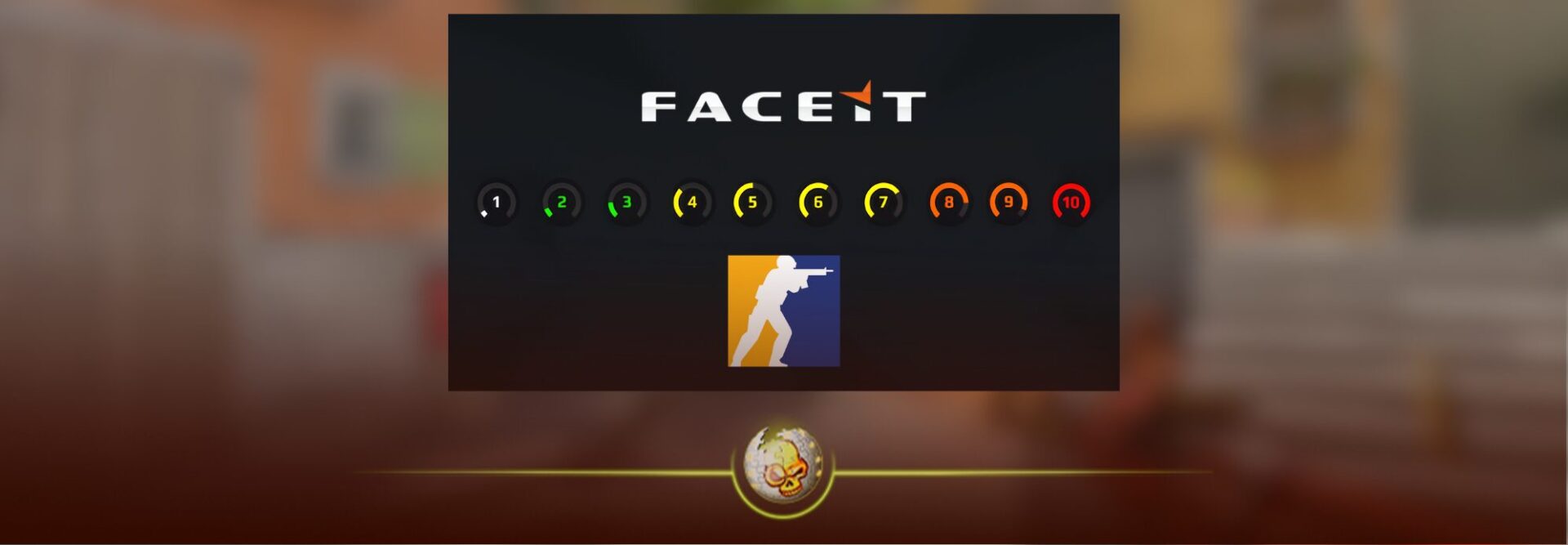
FACEIT CS2 ranks run from Level 1 to Level 10, with your level determined by your FACEIT Elo. Level 1 starts at 100 Elo, while Level 10 begins at 2,001 Elo and has no upper limit. The very highest Level 10 players can also reach Challenger status by entering the top 1,000 on the FACEIT leaderboard.
If you just want the numbers, here they are.
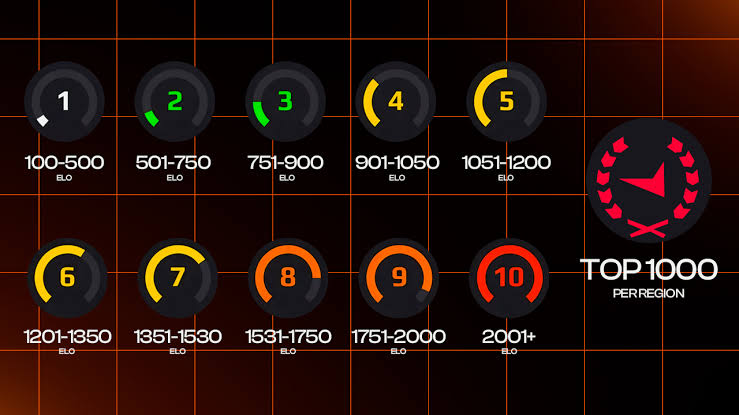
FACEIT CS2 Rank Table
| FACEIT Rank | Elo Required |
|---|---|
| Level 1 | 100 to 500 |
| Level 2 | 501 to 750 |
| Level 3 | 751 to 900 |
| Level 4 | 901 to 1,050 |
| Level 5 | 1,051 to 1,200 |
| Level 6 | 1,201 to 1,350 |
| Level 7 | 1,351 to 1,530 |
| Level 8 | 1,531 to 1,750 |
| Level 9 | 1,751 to 2,000 |
| Level 10 | 2,001+ |
| Challenger | Top 1,000 Level 10 players |
These are FACEIT’s official CS2 Elo brackets as of August 2026.
One important thing to understand is that FACEIT ranks are completely separate from Valve’s regular CS2 ranks and CS2 Premier Rating. There is no official one to one conversion where a certain Premier Rating automatically means a certain FACEIT level.
If you are deciding which ranked system to play, we have a separate breakdown of FACEIT vs Premier in CS2.
How FACEIT CS2 Ranks Actually Work
Your FACEIT rank is basically a simplified display of your Elo.
Instead of showing every player only as a large rating number, FACEIT divides Elo into 10 skill levels. Cross one of the Elo thresholds above and your FACEIT level changes with it.
For example:
1,000 Elo is Level 4.
1,100 Elo is Level 5.
1,500 Elo is Level 7.
1,800 Elo is Level 9.
2,000 Elo is still Level 9.
2,001 Elo moves you into Level 10.
That final jump is important because Level 10 works differently from the other FACEIT ranks. Every level below it has a relatively narrow Elo range. Level 10 has no upper Elo cap.
This is why two Level 10 players can be nowhere near each other in actual rating. Someone sitting just above 2,001 Elo and someone several thousand Elo higher technically share the same FACEIT skill level.
FACEIT Levels 1 to 3
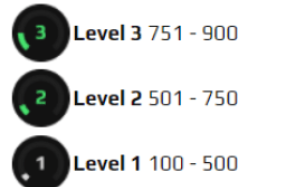
FACEIT Levels 1 through 3 cover players between 100 and 900 Elo.
The exact brackets are:
Level 1: 100 to 500 Elo
Level 2: 501 to 750 Elo
Level 3: 751 to 900 Elo
These ranks have some of the smallest Elo windows in the system, so a good run of results can move your displayed level fairly quickly.
If you are sitting in these ranks, the most useful thing to focus on is consistency. Changing your sensitivity every week, playing with unstable FPS or constantly adjusting your setup makes improving harder than it needs to be.
Our CS2 aiming guide covers sensitivity and DPI, while our best CS2 settings for 2026 are a good starting point if the game itself does not feel consistent.
FACEIT Levels 4 to 6
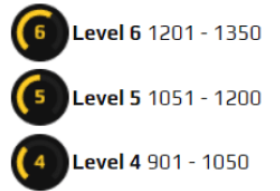
This is where the Elo brackets become:
Level 4: 901 to 1,050 Elo
Level 5: 1,051 to 1,200 Elo
Level 6: 1,201 to 1,350 Elo
A player at exactly 1,000 Elo is therefore FACEIT Level 4.
That number matters because players who join FACEIT without qualifying Premier data currently start at 1,000 Elo. FACEIT can also use a new player’s recent CS2 Premier Rating to determine their starting Elo if the account meets FACEIT’s requirements, including Prime status and the required Premier match history.
So the old idea that every new FACEIT account simply starts at the bottom is no longer accurate.
At this point in the ladder, small improvements start making a noticeable difference over a longer sample of matches. A clean CS2 viewmodel, sensible CS2 launch options and fixing problems if CS2 feels laggy will not magically increase your Elo, but they remove unnecessary problems from your game.
FACEIT Levels 7 to 9
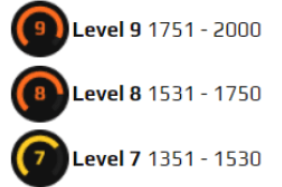
The higher ranks before Level 10 are:
Level 7: 1,351 to 1,530 Elo
Level 8: 1,531 to 1,750 Elo
Level 9: 1,751 to 2,000 Elo
Level 9 is the final step before FACEIT Level 10.
This is also where knowing maps properly starts mattering far more than simply recognizing the basic layout. Giving exact information quickly can decide rounds, especially when everyone in the server already has solid mechanics.
If a specific map is costing you matches, DaddySkins has updated guides for Mirage callouts, Inferno callouts, Dust 2 callouts, Nuke callouts and Overpass callouts.
FACEIT Level 10

FACEIT Level 10 begins at 2,001 Elo.
There is no Level 11.
Once you reach 2,001 Elo, additional Elo simply moves you further through Level 10 and higher on the regional leaderboard. FACEIT specifically describes Level 10 as mathematically uncapped, which is why there can be a huge skill difference between players who technically display the same level.
This is also why asking whether someone is simply “Level 10” does not always tell the full story. Their actual Elo becomes increasingly important once they pass 2,001.
Players still working toward Level 10 should also have the remaining map pool covered. Our Anubis callouts, Cache callouts and Nuke guide can help fill gaps instead of endlessly queueing the same maps.
What Is Challenger Rank in FACEIT?
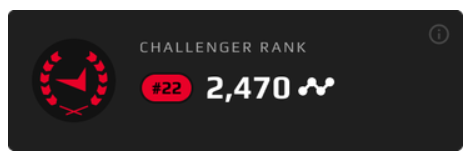
Challenger sits above the normal FACEIT level structure.
You first need to be Level 10. From there, players who reach the top 1,000 of the relevant FACEIT ranking receive Challenger status.
That means there is no fixed Elo number such as “3,000 Elo equals Challenger.”
The required Elo moves because Challenger depends on your leaderboard position and how much Elo the other top players currently have.
This distinction is important because Level 10 is a permanent Elo bracket beginning at 2,001, while Challenger is a position among the highest ranked players.