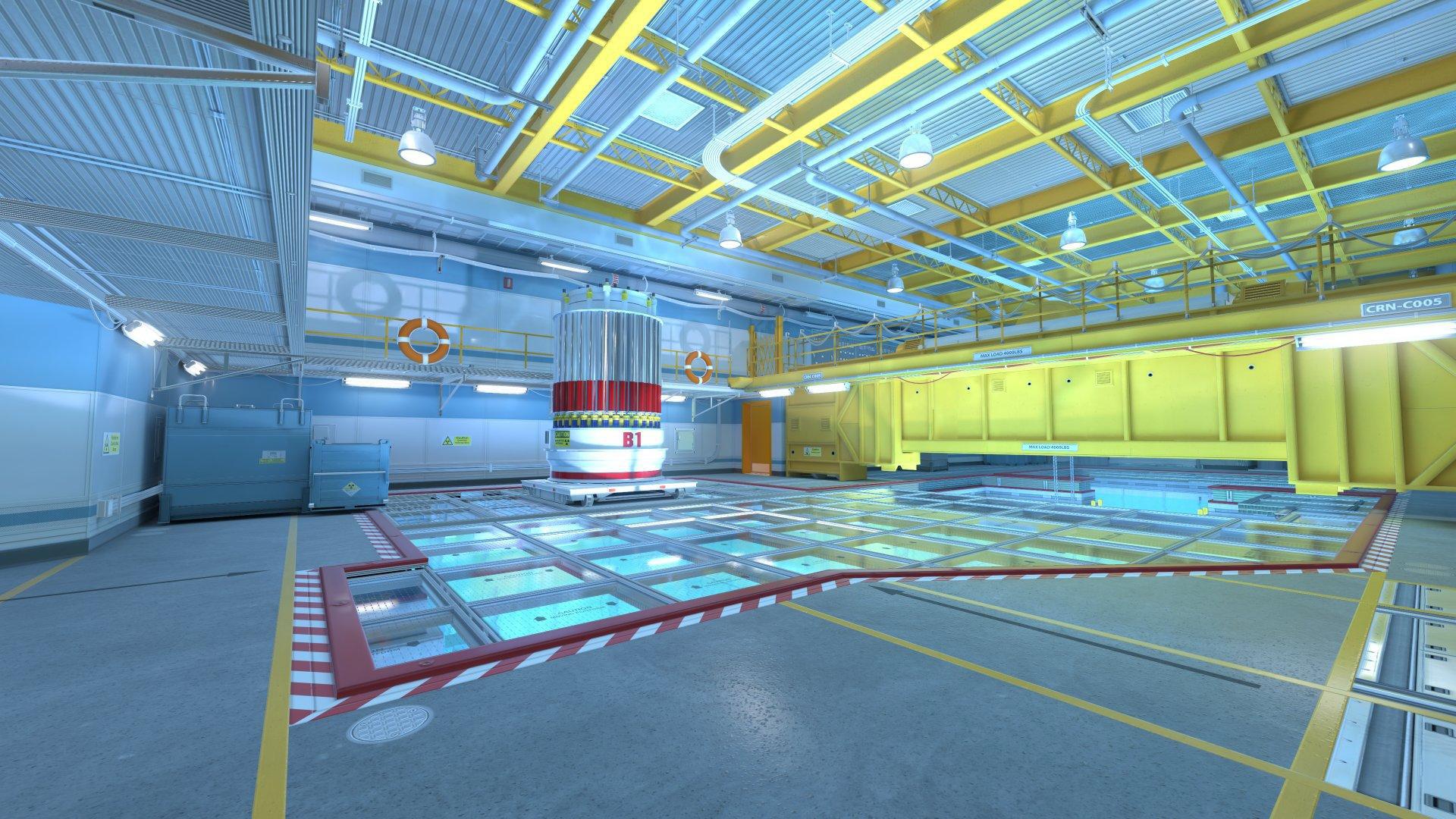
Nuke is one of those CS2 maps where you can know how to aim, know your smokes, know your crosshair, and still get completely lost if your callouts are bad.
It is not like Mirage where most fights happen on one clear level. Nuke has A site above B site, Outside control, Secret drops, Ramp rotations, Vents, Heaven, Hell, Hut, Squeaky, Garage, Lockers, Decon, and a bunch of little angles where one wrong call can make your teammate look the wrong way and lose the round.
That is why learning CS2 Nuke callouts actually matters. You do not need to sound like a pro team with perfect comms, but you do need to know the main names fast enough to help your team react.
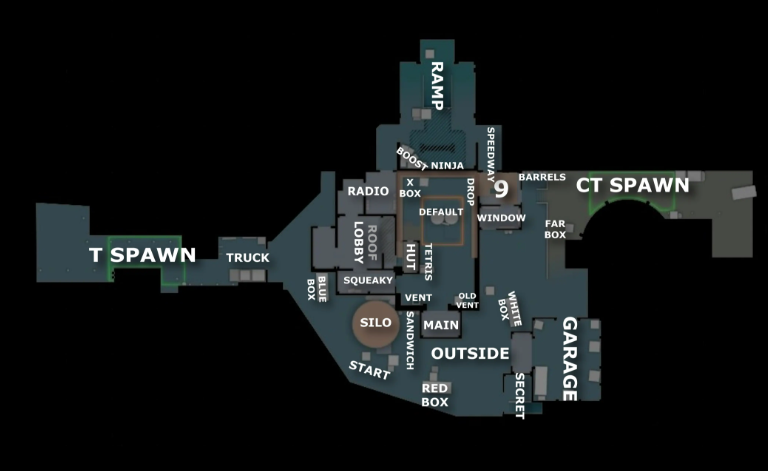
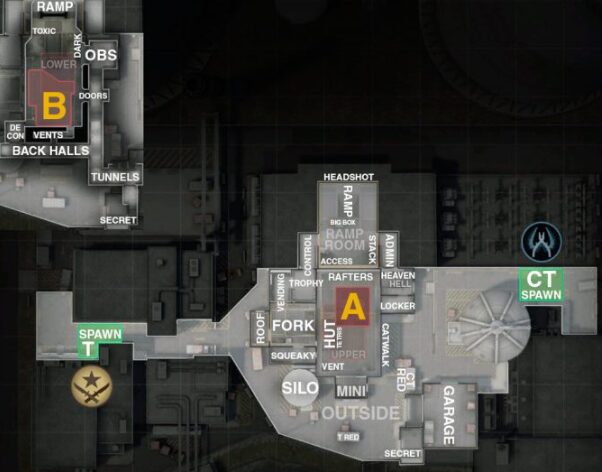
This 2026 guide breaks down the important Nuke callouts in a simple way, so you can use the interactive map, understand what each area means, and give cleaner info in real games.
If you are still learning other maps too, check out our guides on CS2 Mirage callouts, CS2 Inferno callouts, CS2 Dust 2 callouts, and CS2 Overpass callouts after this.
Why Nuke Callouts Are So Important in CS2
Nuke is a rotation-heavy map. The CT side can move between A, Heaven, Ramp, Secret, and B very quickly, while the T side has to figure out whether they want to hit upper, go down vents, fight Outside, or take Ramp.
That means bad communication hurts more on Nuke than on most maps.
For example, saying “one lower” is not always enough. Lower could mean B site, Control, Decon, Window, Doors, Tunnels, or Bottom Ramp. Saying “one Decon” or “one Dark” gives your teammate way better info.
Same thing on A site. Saying “one up” does not help much. Is he Hut? Squeaky? Heaven? Rafters? Main? Mini? On Nuke, those small details change the whole round.
If you want to get better at actually playing the map, not just naming spots, you should also read our how to practice CS2 smokes guide and CS2 1v1 guide. Both help a lot when you are trying to clean up your movement, utility, and duels.
Main Nuke Callout Areas
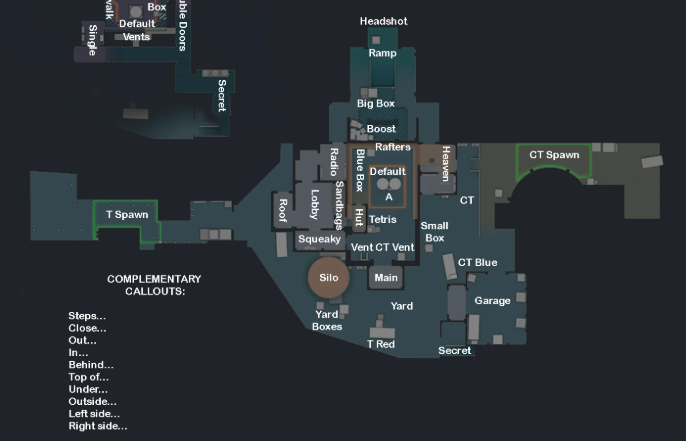
The easiest way to learn Nuke is to split the map into sections:
| Area | Main Callouts |
|---|---|
| A Site | Hut, Squeaky, Rafters, Heaven, Hell, Main, Tetris, Vents |
| Outside | T Red, CT Red, Garage, Secret, Silo, Mini, Lockers |
| Ramp | Ramp, Big Box, Headshot, Boost, Stack, Turnpike |
| B Site | Default, Dark, Window, Double Doors, Decon, Control, Tunnels |
| Lobby | Lobby, Radio, Trophy, Hut, Squeaky |
Once you understand these zones, the map starts to make more sense. You are not just memorizing names. You are learning how players actually move around Nuke.
A Site Callouts on Nuke
A site is the upper bombsite. This is where a lot of fast rounds happen because Terrorists can explode out of Hut, Squeaky, and sometimes Main at the same time.
The most important A site callouts are Hut, Squeaky, Heaven, Rafters, Hell, Main, Mini, Tetris, and Vents.
Hut is the small room that connects Lobby to A site. If someone says “one Hut,” they usually mean a Terrorist is about to swing onto A or is hiding inside the Hut doorway.
Squeaky is the door near Hut. It is one of the most obvious sound cues on Nuke because opening the door gives away the play. A simple call like “Squeaky open” is already useful because it tells your team A pressure might be coming.
Heaven is the high platform above A. CTs love playing here because they can see the site, Hut, and parts of the upper area. Under Heaven is called Hell, which is also important because it connects toward Ramp and lower rotations.
Rafters are the raised beams around A site. Players can hold strong angles from here, especially against Hut and Squeaky pushes.
Vents are the drop from A down toward B. If Ts get into Vents, the round can get scary very fast because they can fake A, drop lower, and force CTs to rotate.
For more beginner-friendly CS2 learning, you can also check our CS2 beginner guide and CS2 ranks explained.
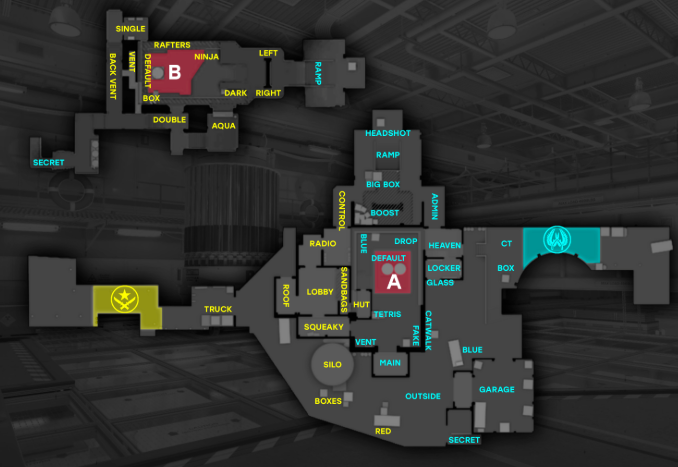
Outside Callouts on Nuke
Outside is one of the most important parts of Nuke because it controls the route to Secret and lower. If Terrorists get Outside control for free, CTs have to worry about Secret, Garage, Mini, and B pressure.
The main Outside callouts are T Red, CT Red, Garage, Silo, Secret, Mini, and Lockers.
T Red is the red container closer to T side. CT Red is the red container closer to CT side and Garage. These are very common callouts when players are crossing Outside or fighting around smokes.
Garage is the big building outside where CTs often play with an AWP. A Garage player can watch Outside crosses, Secret, and sometimes punish Ts trying to walk across.
Silo is the tall structure near T Roof. Players can use it to watch Outside or set up utility. If someone says “one Silo,” look high, not ground level.
Secret is the staircase and path that leads from Outside down to lower. This is one of the most important callouts on the map. If your teammate says “two Secret,” that usually means the Ts are trying to go lower, split B, or fake pressure.
Want to learn utility for spots like Outside and Secret? Read our CS2 smoke commands guide and CS2 jump throw bind guide.
Ramp Callouts on Nuke
Ramp is another major route to B site. It is usually held by a CT who has to decide whether to fight, fall back, or call for help.
The main Ramp callouts are Ramp, Big Box, Headshot, Boost, Stack, Turnpike, and Bottom Ramp.
Ramp is the sloped area that leads down toward B. When someone says “they are Ramp,” it usually means the Ts are taking that side of the map and could end lower soon.
Big Box is the large box near the ramp area. Headshot is a common angle where a player’s head is the only thing showing. These two calls are useful because CTs often play around them to delay pushes.
Turnpike connects Hell and Ramp. It is one of those spots people forget to call, but it matters because a player can rotate through it and catch someone off guard.
Bottom Ramp means the lower part of Ramp, close to the entrance into B. If enemies are already Bottom Ramp, your lower players need to be ready right away.
If you want to improve your fighting on spots like Ramp and Hut, our CS2 crosshair guide and best CS2 settings guide are worth reading too.
B Site Callouts on Nuke
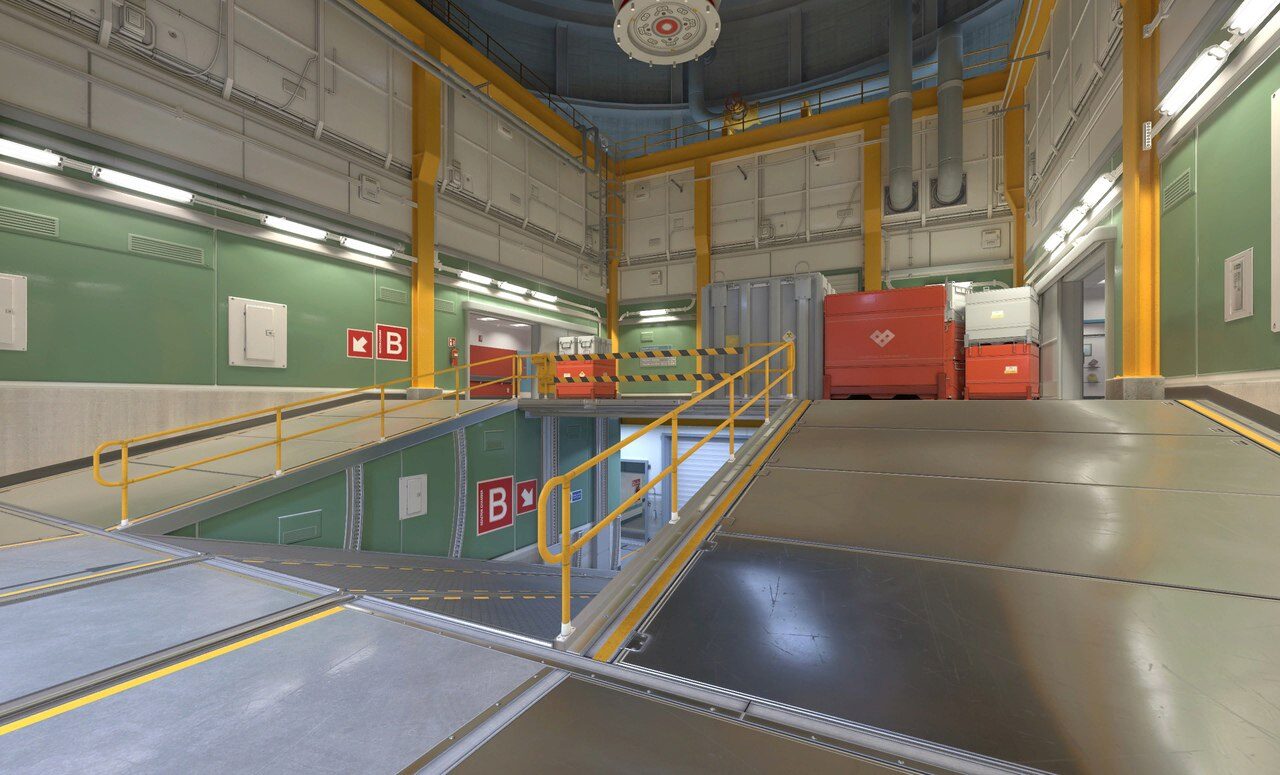
B site is the lower bombsite. It can be reached from Ramp, Secret, Vents, Decon, and Tunnels, which is why it can feel chaotic.
The most important B callouts are B Site, Default, Dark, Window, Double Doors, Decon, Control, Tunnels, and Back Vents.
Default is the normal plant area on B. If the bomb is planted default, your team knows where to aim utility and where to expect the post-plant setup.
Dark is a close corner on B where players can hide. It is a very important call because clearing Dark late can lose the whole round.
Window is the small room near B with the breakable glass. Players can use it to peek into the site or move around lower.
Double Doors are the orange doors leading into B. If someone says “one Doors,” they usually mean a player is close to entering or already holding that entrance.
Decon is the room that connects lower routes into B. This is one of the most common post-plant and retake callouts on Nuke.
Control is another lower room that matters a lot during B takes and retakes. If CTs still have Control, Ts cannot feel fully safe after planting.
Lobby Callouts on Nuke
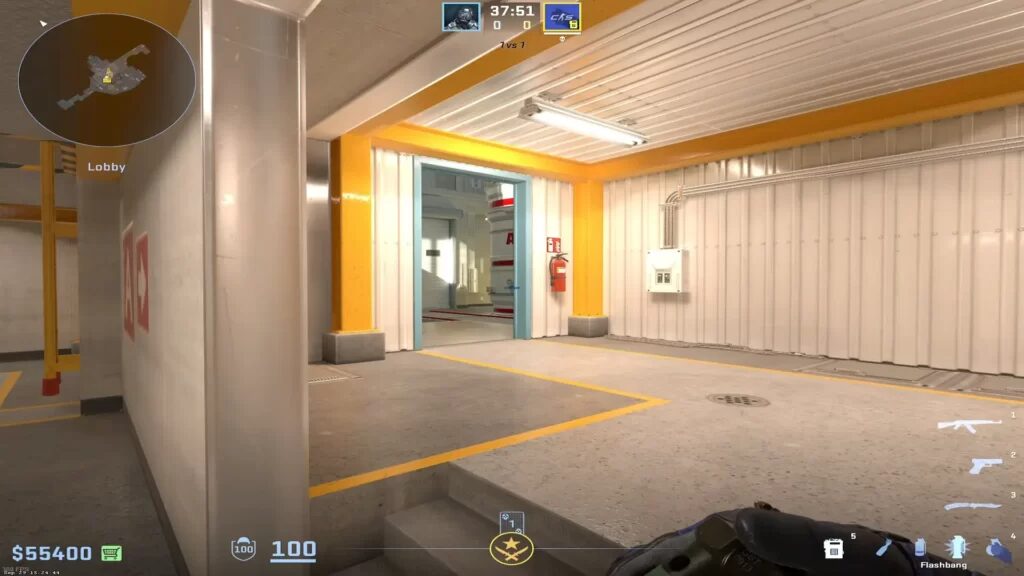
Lobby is where a lot of T-side rounds start. From Lobby, Ts can go Hut, Squeaky, Ramp, or fake pressure.
The main Lobby callouts are Lobby, Radio, Trophy, Hut, and Squeaky.
Radio is the room near Lobby that leads toward Ramp. Trophy is the next room with trophies in it, also leading toward Ramp. These calls help CTs understand if the Ts are setting up for a Ramp hit or just holding lobby control.
Lobby control is also huge for fakes. A team can show Squeaky pressure, throw utility, then quietly move Ramp or Outside. So even simple comms like “Lobby clear” or “Lobby control lost” can help a lot.
Best Way to Learn Nuke Callouts
The best way to learn Nuke callouts is not to memorize 50 names in one sitting. That gets boring and you will forget half of them.
Instead, learn the map in layers.
Start with the big areas: A, B, Outside, Ramp, Lobby, Secret.
Then learn the important fight spots: Hut, Squeaky, Heaven, Hell, Rafters, Garage, T Red, CT Red, Big Box, Dark, Decon, Control.
After that, learn the smaller names that make your comms cleaner.
You can also open an interactive Nuke callout map while watching demos or playing practice games. When someone kills you, look at the area and say the callout out loud. It sounds dumb, but it works.
If you are trying to get better overall, read our CS2 Premier guide, Faceit vs Premier guide, and how to get better at CS2.
Final Thoughts on CS2 Nuke Callouts in 2026
Nuke looks confusing at first because it has so many vertical layers, but the callouts become easy once you understand the main routes.
A site is about Hut, Squeaky, Heaven, Rafters, and Vents. Outside is about Red, Garage, Secret, and Silo. Ramp is about stopping the lower rotate. B site is about Decon, Dark, Doors, Window, and Control.
Once you know those names, your comms become faster and your teammates can actually play off your info.
That is the real point of learning Nuke callouts. It is not about sounding smart. It is about saving rounds.
So keep the interactive map open, play a few matches, and start using the names one by one. After a while, Nuke stops feeling like a maze and starts feeling like one of the most fun maps in CS2.