
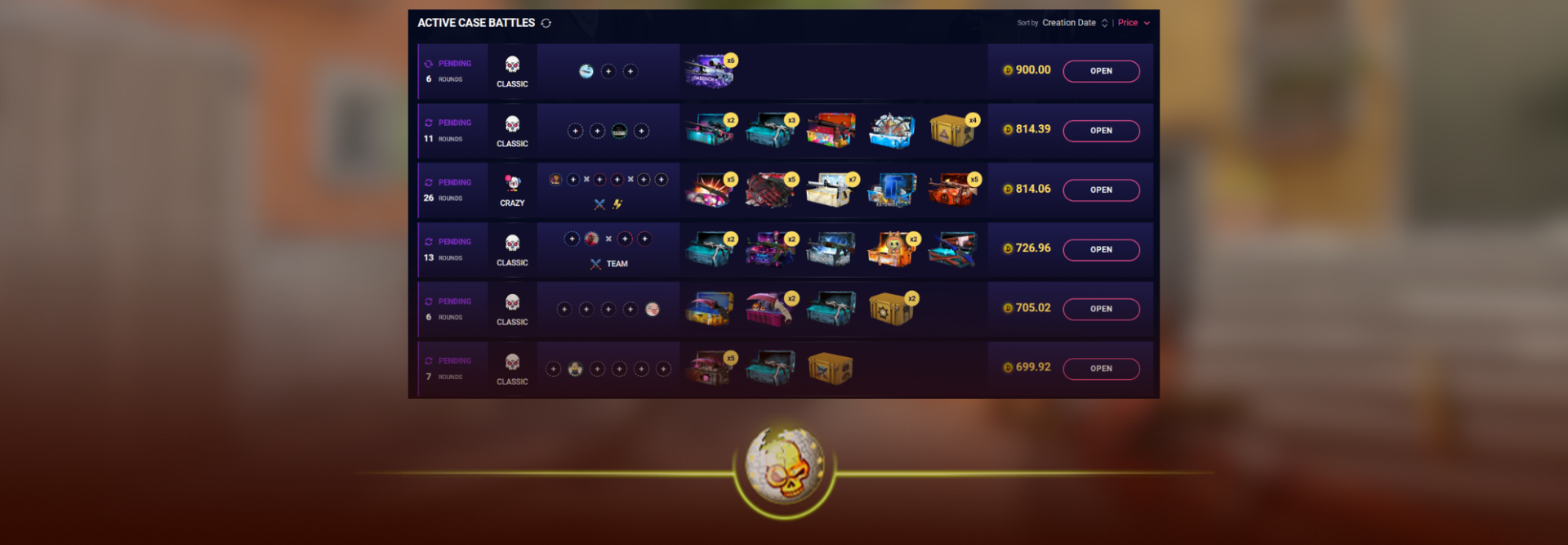
If you’ve watched CS2 case openings before, you’ve probably seen someone pull a crazy skin and celebrate.
Case battles make that a little more stressful.
Instead of opening cases by yourself, you open the same cases against another player or group of players. Your pulls are compared after each round, and depending on the battle mode, one player or team walks away with the combined winnings.
That is basically a CS2 case battle.
The simple version:
Everyone pays for the same case lineup → everyone opens the same cases → the values are added up → the winning player or team gets the battle’s rewards.
They’re faster, more competitive and usually way more volatile than opening cases alone. One huge pull can completely flip a battle in the final round.
If you want to see the format in action, you can check out DaddySkins Case Battles.
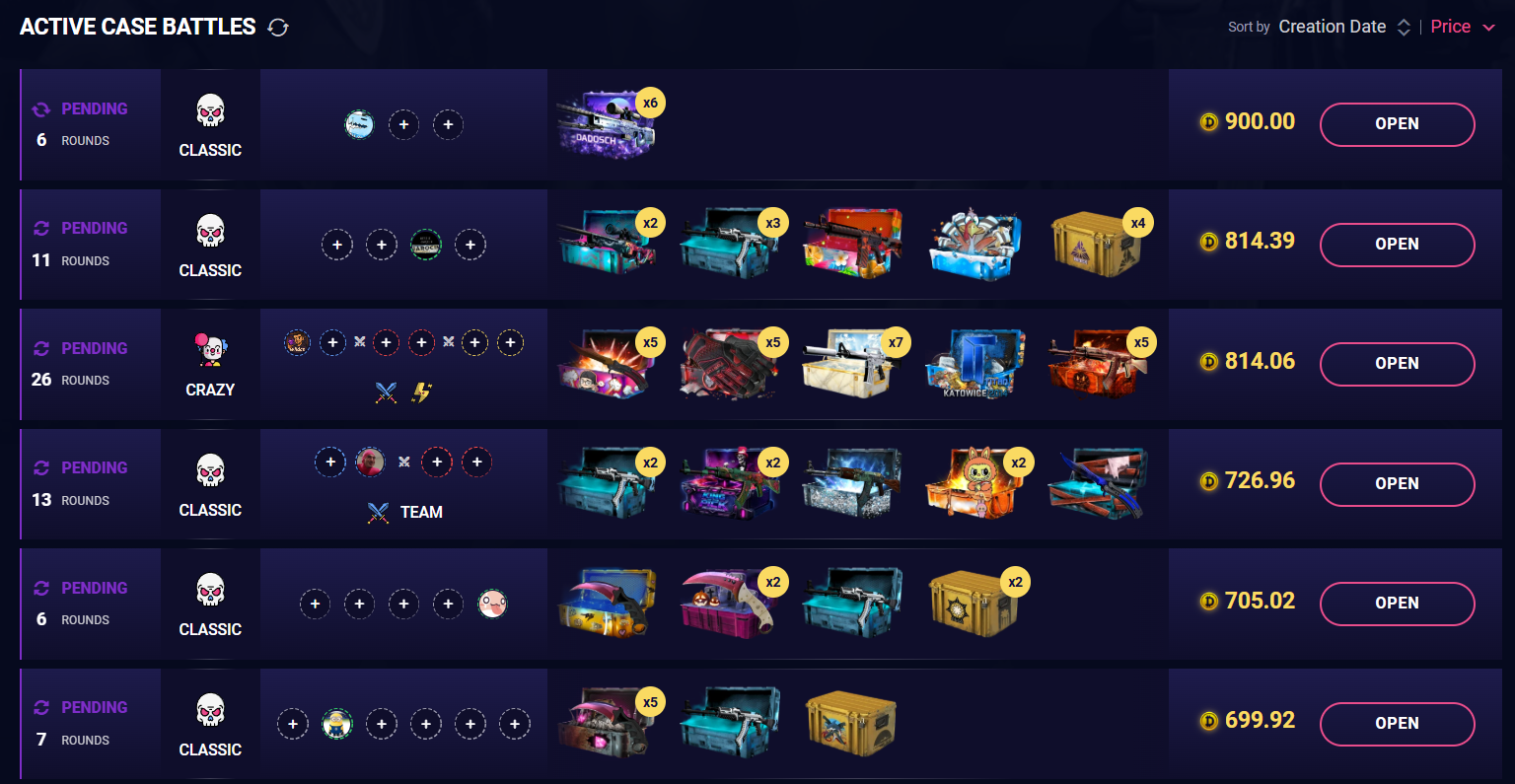
What Is a CS2 Case Battle?
A CS2 case battle is a multiplayer version of case opening.
Rather than paying for a case, opening it and keeping whatever you pull, several players enter the same battle and open an identical lineup of cases.
For example, imagine a two-player battle with three cases:
Player 1 opens the same three cases as Player 2.
After all three are opened, Player 1 might have pulled $18 worth of skins while Player 2 pulled $42.
In a normal highest-value-wins battle, Player 2 wins.
It sounds simple, and honestly it is.
What makes battles interesting is that you are not only hoping your own cases hit. You are also watching what everyone else pulls.
You can have an awful first few rounds, pull something huge at the end and suddenly win the entire battle.
Or the exact opposite can happen.
That is why people who normally find solo case openings a little slow sometimes prefer battles.
How Do CS2 Case Battles Work?
Most CS2 case battles follow roughly the same process.
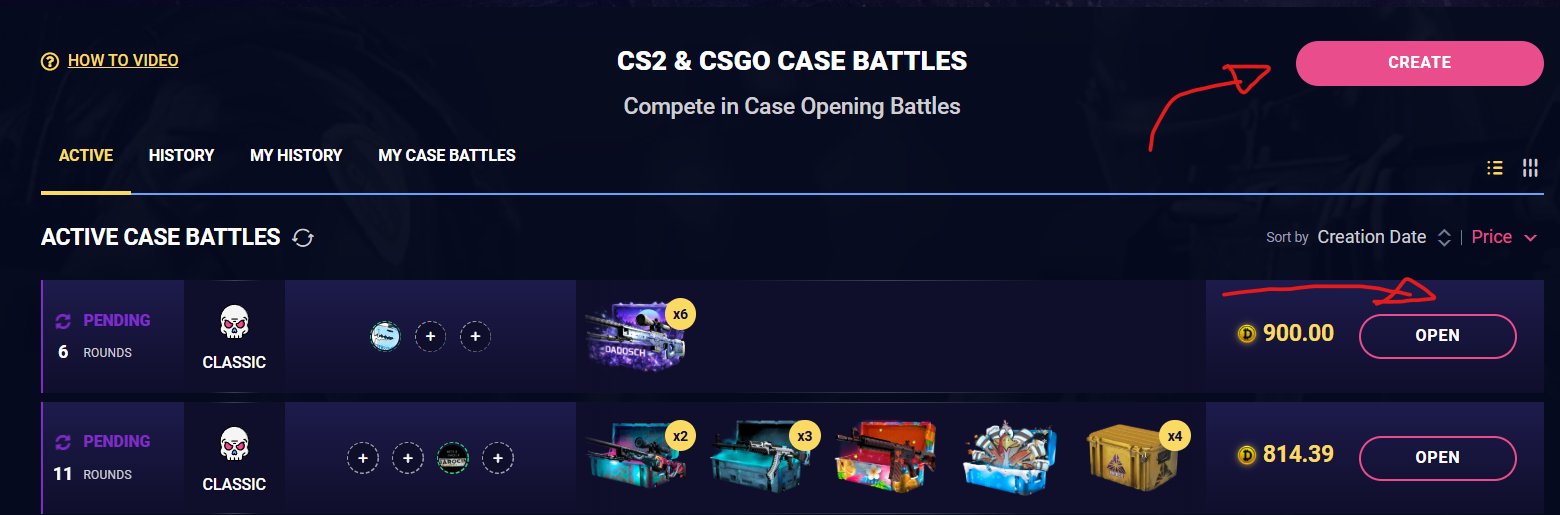
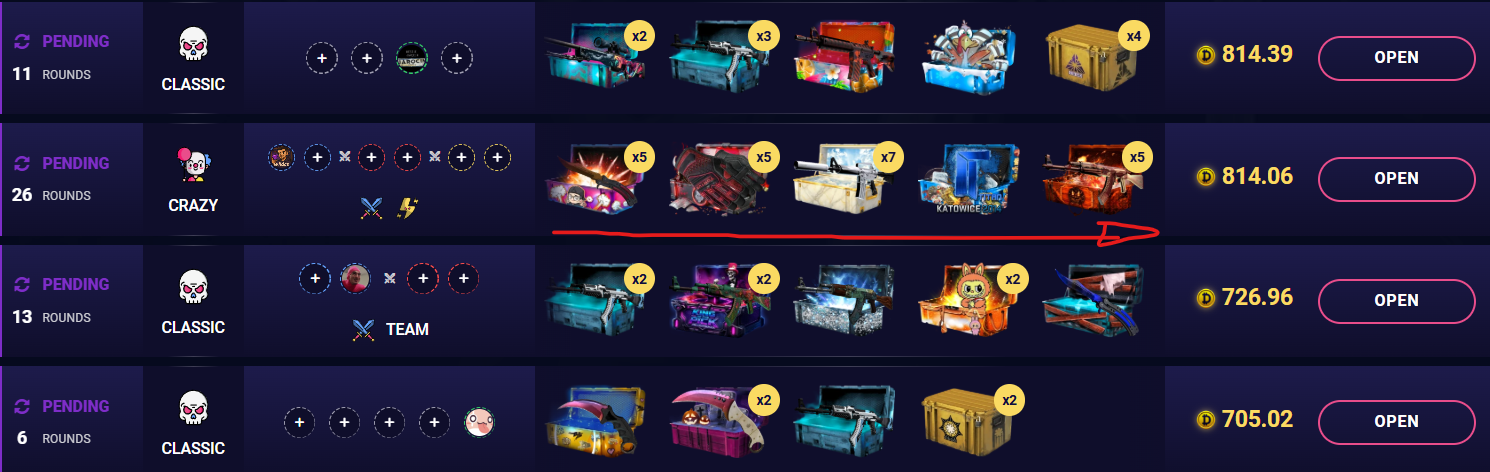
1. Create or join a battle
You can either create your own battle or join one that is already waiting for players.
When creating one, the battle creator chooses the cases that will be opened and the number of participants.
You will normally see the total entry price before joining.
If you are still new to cases in general, read our How to Get CS2 Cases guide first.
2. Every player gets the same case lineup
This is the important part.
Players are not opening completely different cases against each other.
If the battle contains five cases, every participant opens those same five cases.
That keeps everyone playing from the same starting point.
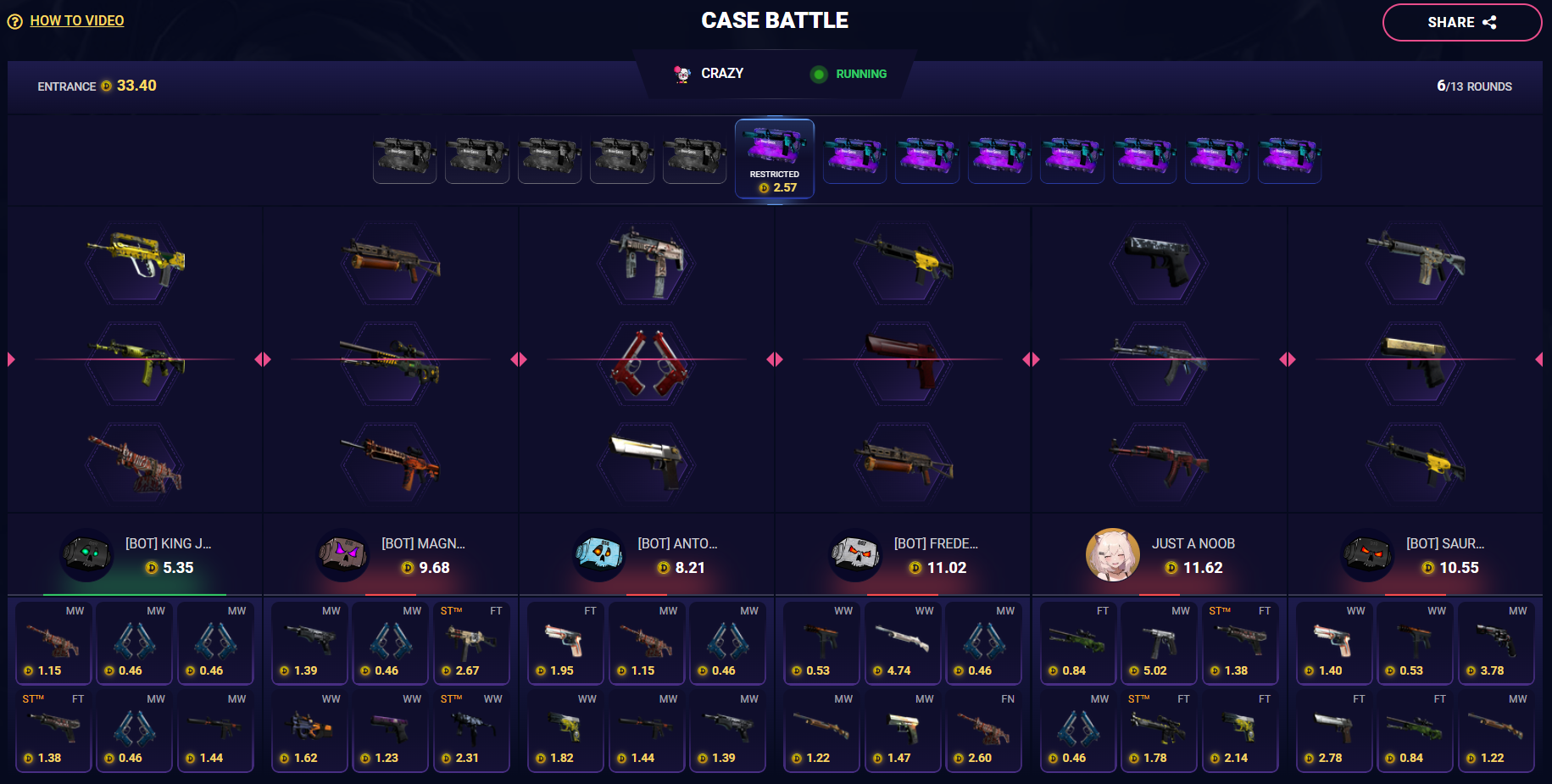
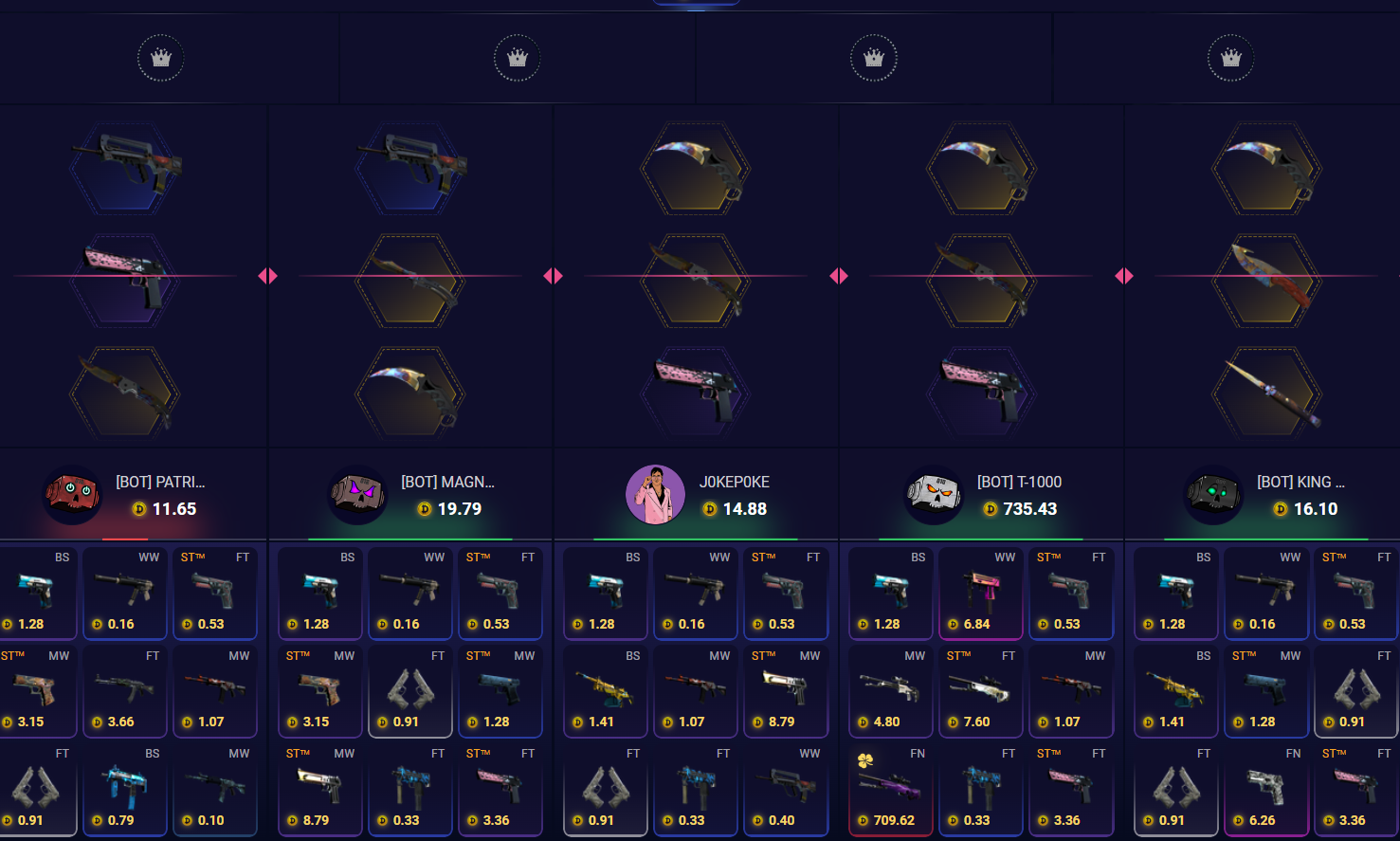
3. The cases open round by round
Once every spot is filled, the battle begins.
Each player receives an individual result from the case being opened.
The value of those skins is then added to their total as the battle continues.
You can normally see who is currently winning in real time.
4. The totals are compared
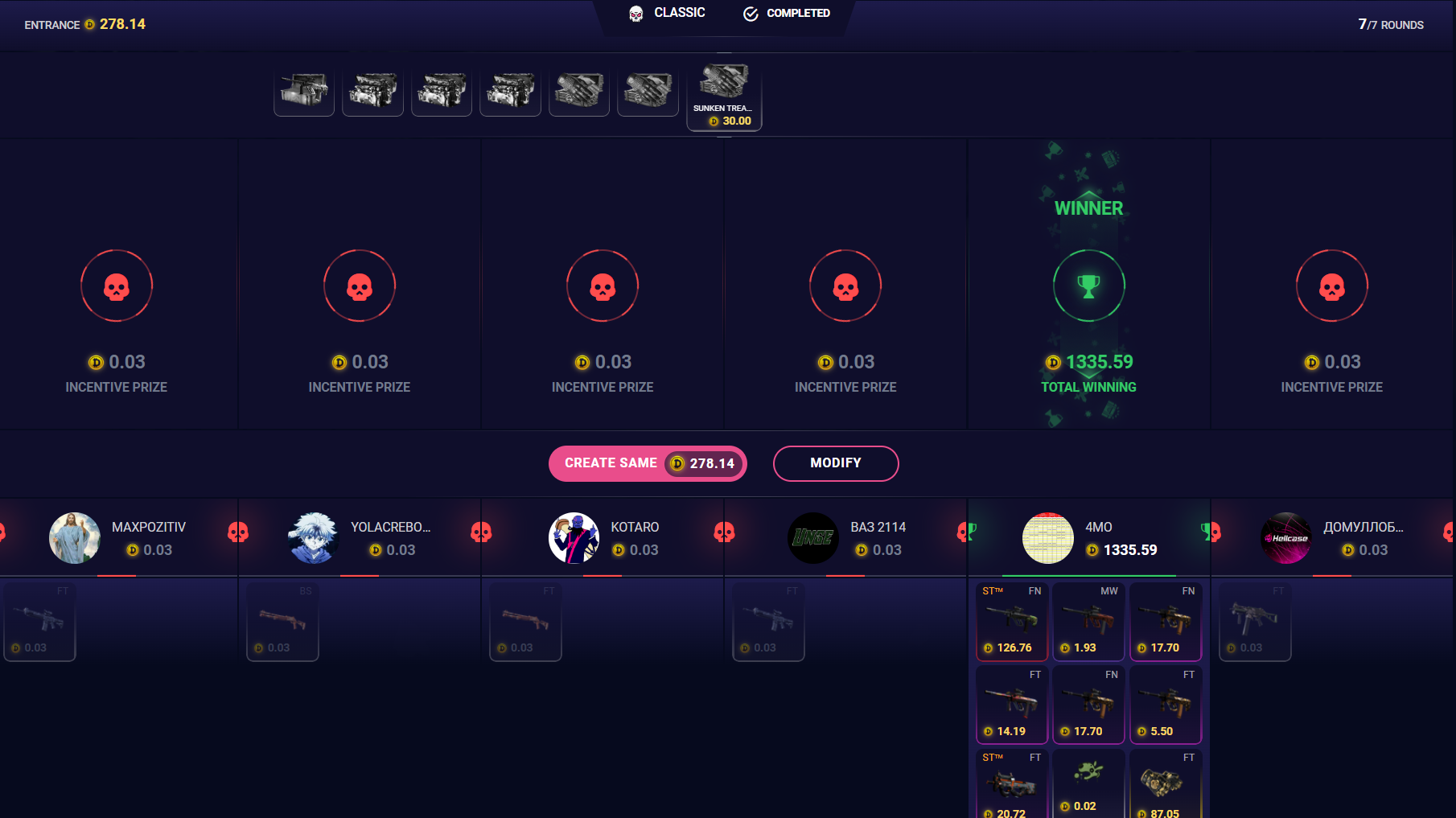
At the end of the final case, the battle calculates the results.
In a traditional case battle, the player with the highest combined item value wins.
Some sites also offer different rules, which we’ll get into below.
5. The winner receives the battle rewards
Instead of everyone simply keeping their individual pulls, the battle distributes the rewards according to its selected mode.
That winner-takes-all feeling is the main difference between a case battle and simply opening cases normally.
CS2 Case Battle Modes Explained
Not every case battle works exactly the same way.
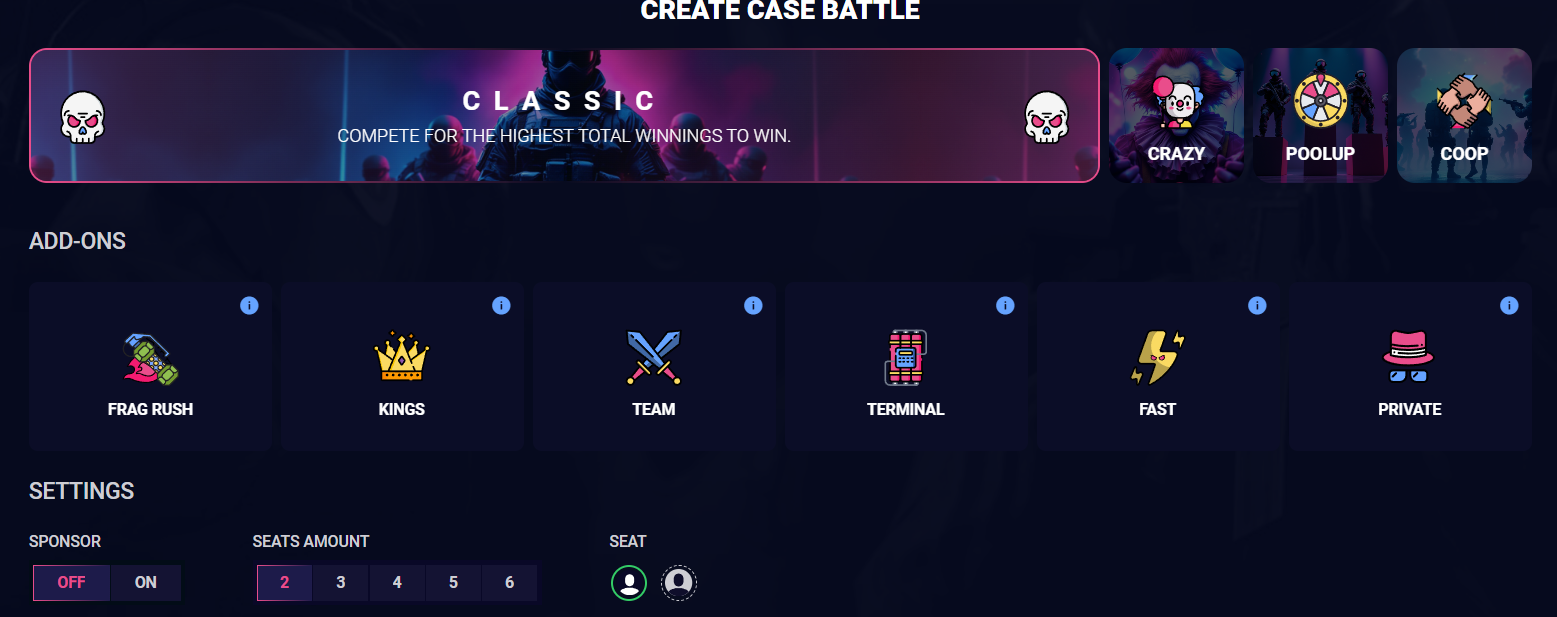
Different platforms use slightly different names, but these are the main formats you are likely to see.
1v1 Case Battle
This is probably the easiest format to understand.
Two players enter.
Both open exactly the same cases.
At the end, the player with the winning total takes the battle.
If you’ve never tried a battle before, this is the format that makes the mechanics easiest to follow.
Free-for-All Battles
Instead of fighting one opponent, you can have three or four players competing individually.
The idea stays the same.
Everyone opens the same cases, but now you have more totals to beat.
A four-player battle can create a much larger prize pool, but there are also three other players who can beat you.
Team Case Battles
Some platforms also allow teams.
A common example is 2v2.
Instead of looking only at your personal drops, the values pulled by both teammates are combined.
The team with the winning total takes the result according to that platform’s rules.
It also creates some pretty funny situations where one teammate pulls absolutely nothing while the other person basically carries the entire battle.
Crazy or Underdog Mode
This one completely flips normal case battles around.
Instead of the highest value winning, the lowest value wins.
So suddenly pulling the cheap item from a case can actually be what you want.
Not every CS2 case-battle platform uses this mode, and the exact name varies, but you will commonly see it referred to as Crazy Mode or Underdog Mode.
Other Battle Modes
Some sites have also experimented with elimination, shared-pot and other custom battle formats.
Because these modes change pretty regularly, always read the actual rules displayed in the lobby before joining instead of assuming every battle works the same way.
That sounds obvious, but it is surprisingly easy to enter something like a lowest-value-wins battle while thinking you are playing normal mode.
What Are the Odds of Winning a CS2 Case Battle?
This is where people sometimes overcomplicate things.
There are really two different types of odds involved.
Case odds
First, there are the odds of actually pulling each skin from the case.
Those depend on the specific case.
A case filled with mostly cheap skins and one extremely expensive knife is going to behave very differently from a case with rewards spread more evenly across the price range.
Before opening anything, look at the individual item probabilities.
If you want to understand why blue, purple, pink and red items have such different rarity levels, our CS2 Skin Rarity Order guide breaks that down separately.
Battle odds
Then there is your chance of actually winning the battle.
If every participant has the same case lineup and results are random, the simple starting point is:
| Battle | Approximate share of winning outcomes |
|---|---|
| 1v1 | 50% |
| 3-player | 33.3% |
| 4-player | 25% |
| 2v2 team | 50% per team |
Real battle settlement can include ties and platform-specific rules, so think of those numbers as the basic mathematical starting point rather than a promise.
And importantly:
A 50% chance to beat one opponent does not mean the battle itself is profitable.
The cases being opened still have their own probabilities and economics.
That distinction matters.
Do Case Battles Give Better Case Odds?
Usually, no.
Turning a case into a battle does not magically make its rare skin easier to pull.
You are still opening the underlying case.
The battle changes who receives the combined result, not the probability of your individual roll simply because another person is there.
So if a case has a very small chance of hitting its most expensive item, putting that case into a 1v1 battle does not suddenly double the chance of pulling it.
What does change is the variance.
In a solo opening, you keep whatever you personally pull.
In a winner-takes-all battle, you can lose your entire battle even after getting a decent pull because someone else got something worth more.
You can also get an awful pull and still win because the other player did even worse.
That is what makes case battles feel so different.
Does Choosing More Expensive Cases Improve Your Chances?
Not automatically.
An expensive case can contain more expensive rewards, but that does not mean it gives you some hidden advantage over the other player.
Remember, everyone in the battle is opening the same case.
What really changes from case to case is the distribution of the possible results.
Some cases are extremely top-heavy.
Most of the items may be relatively cheap, with a tiny chance of hitting something massive.
Other cases have values that are much closer together.
That can completely change how a battle feels, but there is no magic case that guarantees a win.
If you are comparing actual CS2 cases and what they contain, check our Best CS2 Cases to Open in 2026 guide.
Case Battles vs Normal Case Opening
There is one big difference.
Solo case opening is you versus the case.
Case battles are you versus the case and another player’s result.
Opening alone means you always keep the result you pulled.
Battles give you the possibility of taking a much larger combined result, but they also create the possibility of walking away with nothing from that battle.
So neither format suddenly removes the randomness from case opening.
Battles just package that randomness into something more competitive.
If you want to see more of your own opening history, our How Many CS2 Cases Have I Opened? guide shows you how to check it.
What Actually Matters Before Joining a Case Battle?
People often obsess over whether a bot got “too lucky,” whether a last-round pull looked suspicious or whether a losing streak means something is wrong.
Random results can look ridiculous in the short term.
Instead, focus on things you can actually check.
Look at the case odds before entering.
Understand exactly which battle mode you joined.
Check how ties are handled.
Understand how withdrawals work.
And most importantly, look for a Provably Fair system that lets results be verified instead of simply asking you to trust what happened.
Also, do not fall into the “I lost three, so I’m due to win the next one” mindset.
You are not.
A previous loss does not somehow make the next case owe you a good skin.
Case Battles on DaddySkins
DaddySkins lets players take normal case opening and turn it into a multiplayer competition through DaddySkins Case Battles.
Instead of only watching your own opening, you can compete against other players while the values move round by round.
If case battles are not really your thing, there are other ways to interact with CS2 skins too.
You can learn how the DaddySkins Skin Upgrader works, understand CS2 Trade Up Contracts, check the Cheapest Knife Trade-Up, or compare different knives using our CS2 Knife Tier List.
And if you actually hit something rare, remember that the skin itself can have more going on than its basic market name.
Float, wear and especially rare paint seeds can change value significantly.
Our CS2 Pattern Index Guide explains why two versions of what appears to be the same skin can sometimes be worth completely different amounts.
Are CS2 Case Battles Worth It?
If by “worth it” you mean guaranteed profit, no.
Case battles are chance-based.
There is no strategy that can guarantee the next player opens something worse than you.
The appeal is the format itself.
You get the suspense of case opening mixed with actually competing against another player, and multi-round battles can swing back and forth right until the final case.
Treat that as entertainment rather than some secret way to print skins.
If you simply want a specific skin, buying or trading for the item directly can often make a lot more sense than repeatedly trying to hit it through random outcomes.
And if you are playing with real value, set a limit before you start rather than deciding your limit after you lose.
You can also read our guide covering CS2 case restrictions and banned regions if you want to understand how case-related rules differ by location.
For more related guides, browse our CS Case Guides section.
Final Thoughts
CS2 case battles are really just case opening with another layer added on top.
Everyone opens the same cases, the values are compared, and the battle rules decide who gets the rewards.
The concept is simple.
The results definitely are not.
A cheap pull can lose you a normal battle, save you in Crazy Mode or mean absolutely nothing if somebody hits a massive skin in the last round.
That unpredictability is pretty much the whole reason case battles exist.
Just understand the case odds, know the mode you are entering and never assume a previous loss means the next battle has to go your way.
If you want to try the format yourself, head over to DaddySkins Case Battles and check the current battles and case lineup.