

Valve just scored a major courtroom win against inventor Leigh Rothschild but days later New York Attorney General Letitia James sued Valve alleging CS2 style loot boxes are illegal gambling. Here is what happened and what it could mean for players, parents, and the skin economy.
What happened and why this story matters
In the span of about a week, Valve found itself on two very different legal front lines.
First, Valve won a high profile trial in federal court in Washington state against inventor Leigh Rothschild and related entities in a case built around Washington’s Patent Troll Prevention Act and related claims. The jury sided with Valve across its counts and the court record notes an advisory finding that favored Valve on invalidity of a patent claim tied to the dispute.
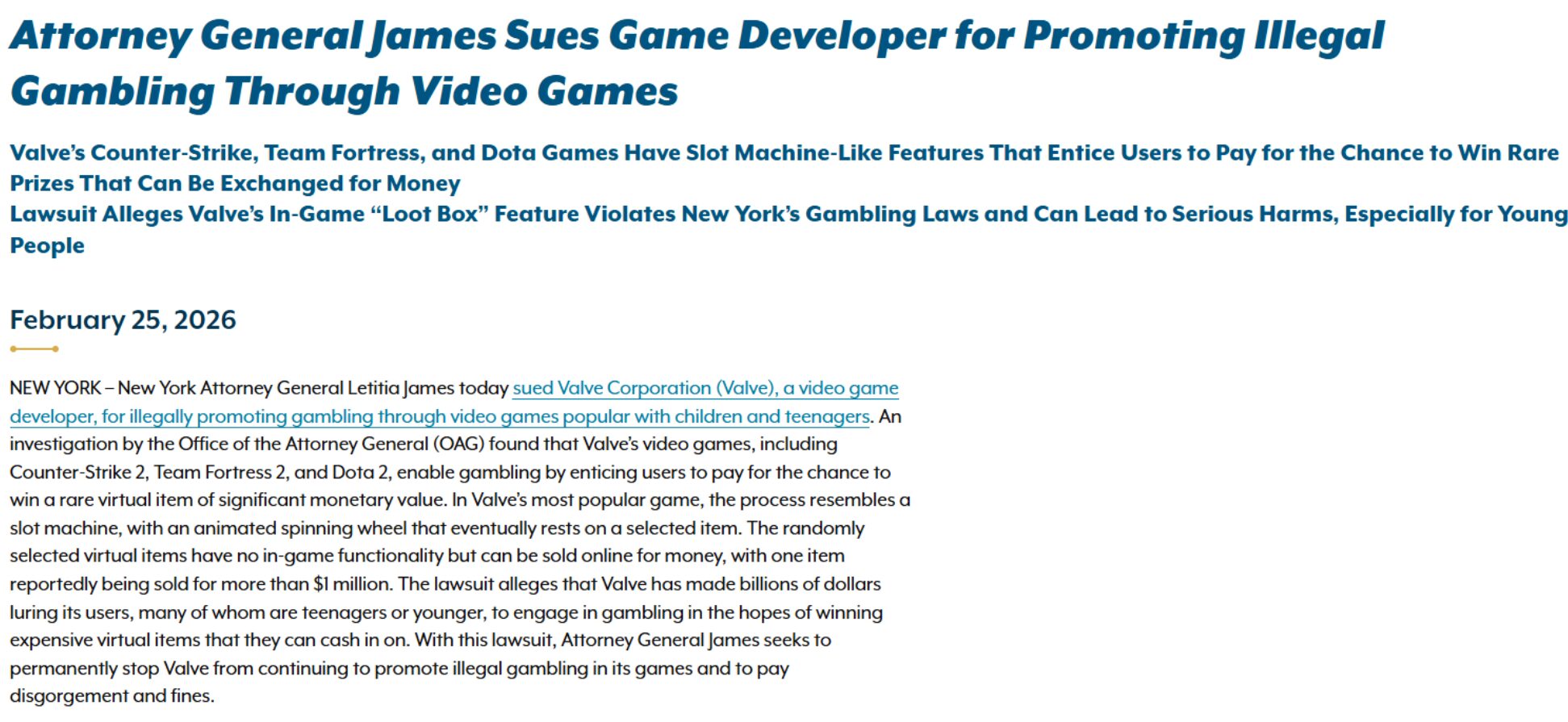
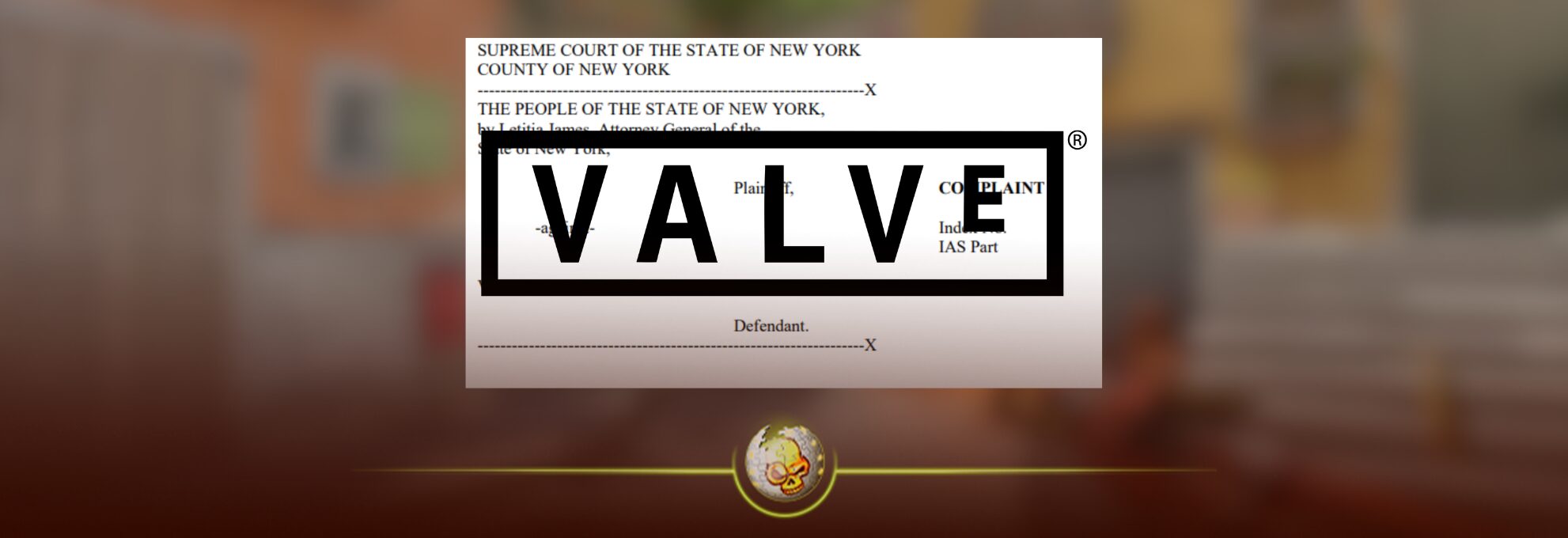
Then, New York Attorney General Letitia James filed a lawsuit in Manhattan state court accusing Valve of promoting illegal gambling through loot box style mechanics in games including Counter Strike, Team Fortress, and Dota. The state argues the paid chance at random virtual items is gambling under New York law, with a particular focus on harm to minors.
For the CS2 community and anyone who follows skins, case openings, and the wider marketplace economy, the New York case is the bigger immediate headline because it targets core monetization and the ecosystem around tradable items.
The Rothschild case
The Rothschild matter is essentially a patent litigation story.
Valve sued Rothschild and affiliated entities in 2023, alleging bad faith patent assertion behavior that Washington’s Patent Troll Prevention Act was designed to deter. According to Bloomberg Law’s reporting, the jury favored Valve on all counts that went to verdict, and the judge had previously ruled in January that Rothschild related entities breached a licensing agreement by suing Valve in 2022.
If you are a developer or a platform operator, that victory matters because it signals courts may be willing to enforce state level tools that discourage meritless patent threats. For players, it is mostly background context except for one key point: Valve had momentum and goodwill from a courtroom win right before the New York suit landed, which is why the contrast is so sharp.
The New York lawsuit explained
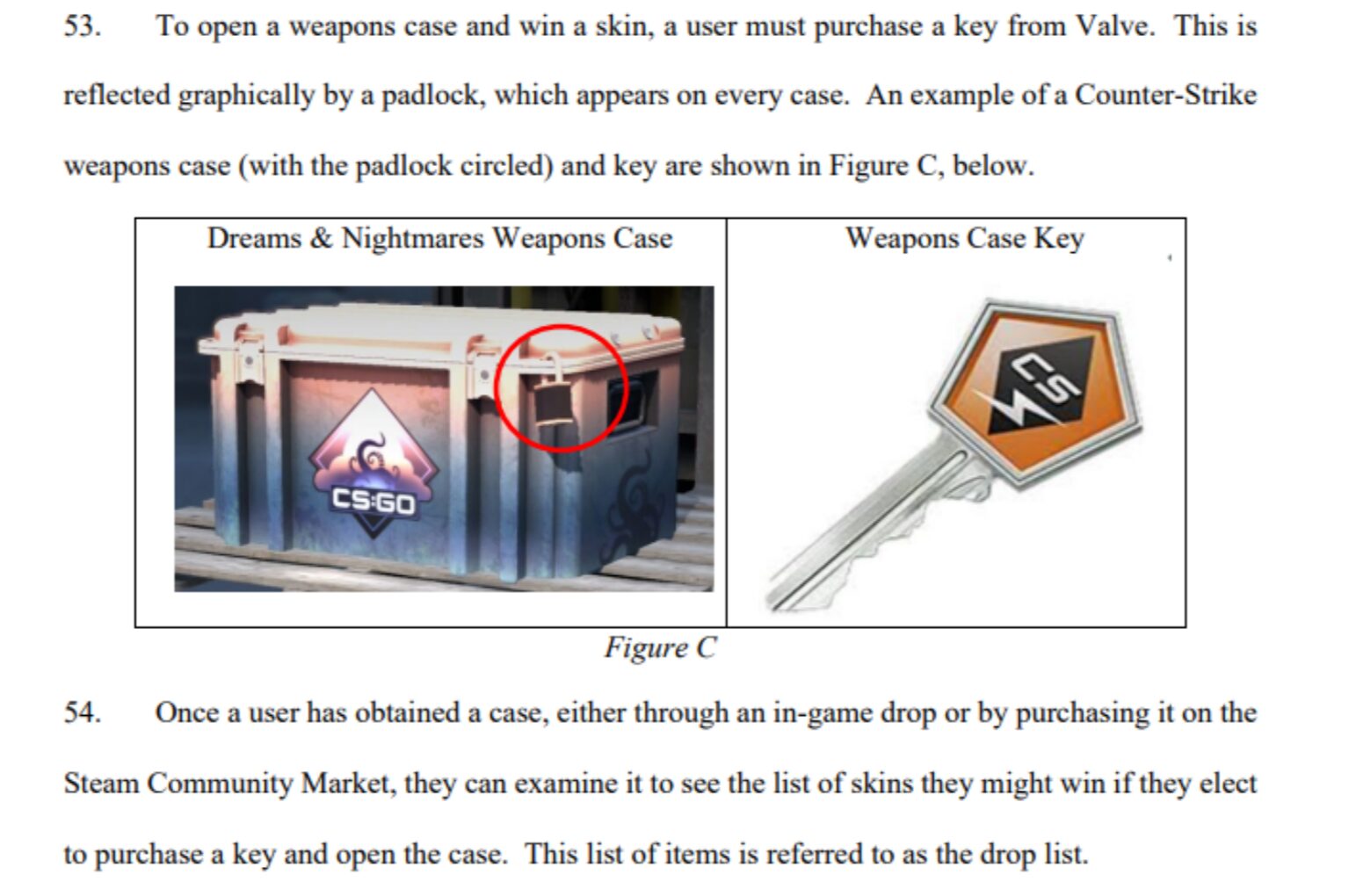
New York’s complaint frames certain loot box mechanics as “quintessential gambling” because a user pays real money for a chance outcome and can receive items of widely varying value. Reuters reports the state is seeking restitution plus a fine equal to three times Valve’s alleged illegal gains.
The Attorney General’s office also emphasizes the youth angle. The press release says the mechanics are slot machine like and can lead to serious harms, especially for young people, and it explicitly names Valve franchises including Counter Strike.
Several outlets highlight that Valve’s ecosystem is unusual because it does not stop at opening a case. The suit points to the Steam Community Market and the broader secondary market dynamic around items, where Valve can also earn fees when items are resold on Steam.
| Topic | What the reporting says |
|---|---|
| Who sued Valve | New York Attorney General Letitia James |
| Where it was filed | Manhattan state court |
| What games are named | Counter Strike, Team Fortress, Dota |
| Core allegation | Paid loot boxes function like illegal gambling |
| Remedies sought | Stop the practices, restitution, and penalties described as triple gains |
Why the state is focusing on loot boxes
Loot boxes have been controversial for years, but regulators tend to care most when three ingredients show up together.
- Real money is used to buy access to random rewards
- The outcome is driven primarily by chance
- The rewards can be exchanged or treated like value
The New York case leans hard on all three, especially the third ingredient, because tradable skins and marketplaces can make the rewards feel less like cosmetic fun and more like something with money like behavior.
What this could mean for CS2 players and the skin economy
Nobody can responsibly predict the outcome on day one, but we can map the practical pressure points.
1. Changes to how cases and keys work in New York
If the state wins meaningful injunctive relief, Valve could be pushed to change how paid randomized openings work for New York users. That might mean gating by age, altering purchasing flows, or changing the mechanic to reduce the gambling like elements alleged in the complaint.
2. Increased compliance style changes across the board
Even if a case is filed in one state, platform companies sometimes standardize changes to simplify operations. That does not always happen, but it is common enough that players outside New York should still pay attention to the direction of travel.
3. More scrutiny on third party skin markets
AP notes the existence of third party markets where items can reach very high prices, and the New York complaint highlights the broader market dynamic as part of the alleged harm and incentive structure. If regulators focus more on the resale layer, third party operators could face additional enforcement pressure too, even when Valve is the named defendant.
4. A new wave of copycat lawsuits
High visibility actions from a major state Attorney General can inspire similar filings elsewhere. Whether that happens will depend on local law and political appetite, but the pattern is not rare in consumer protection enforcement.
What parents should know
If you are a parent reading this because your kid plays CS2, the practical takeaway is simple.
Paid randomized openings can feel like a game inside the game. The dopamine hit is the point, and the design is meant to make rare outcomes feel just close enough to keep trying. That is exactly what New York is arguing should be treated like gambling, especially when minors are involved.
Helpful steps that do not require legal knowledge:
- Turn on platform level purchase controls and require approval for spending
- Set a monthly spending cap and treat it like any other entertainment budget
- Talk about odds and randomness in plain language before the first purchase
- Watch for compulsive patterns like chasing losses or hiding spending
Why this is bigger than Valve
Regulators have already acted against loot box style systems in other contexts. Reuters points to the FTC action involving Genshin Impact’s publisher and a settlement that included a financial penalty and restrictions related to minors and disclosures. That example matters because it shows regulators are willing to treat loot box practices as a consumer protection issue, not just a gaming culture debate.
Valve’s case is different, but the overall trend is clear: monetization mechanics that look like wagering are becoming a legal risk, especially where children are concerned.
What to watch next
Here are the next milestones that will matter most.
- Valve’s initial public response and legal filings
- Any request for an early court order that forces near term changes
- Whether New York seeks broader remedies that could affect marketplace behavior
- Whether other states or regulators announce investigations
For the CS2 scene, the biggest real world question is whether changes would be localized to New York or whether Valve would apply a uniform policy shift for simplicity.
Read More From Daddyskins
- How to Fix Packet Loss in CS2 (2026)
- 100 Thieves CS2 is back and the roster is now complete
- RYU CS2 Player Profile & Biography
- CS2 Bunny Hop Command
- SpotGuesser CS2 Guide (Spotguessr)
- BLAST Bounty Winter 2026 Schedule, Prize Pool, and Streams
- Aurora CS2 Team, Players and Stats
- Monte CS2 Team Roster Players Results and 2026 Outlook
- CS2 Premier Season 4: Everything You Need to Know
- CS2 Sticker Crafts of 2026 Best and Cleanest Craft Ideas
- CS2 Update 2026: Train Out, Anubis In, and Why This Week Matters
- CS2 Premier Season 4: Start Date, Changes & What You Need to Know
- CS2 Premier Season 4 Leaks
- CS2 Premier 4 Skins & Knives – What We Know
- Harlequin & Achroma COLLECTION SKINS In-Game (New CS2 Update)
- CS2 update today full patch notes and changes explained
- IEM Kraków 2026 Stage 1 Preview and Predictions for CS2
- Cache return rumors resurface in CS2
- CS2 Patch Update January 30, 2026
- New CS2 Skins Just Dropped: Season 4 CS2 Skins
- Cheapest Pink CS2 Skins in 2026
- Valentine’s Day CS2 Skins
- Mudryk CS2 Faceit Ban Explained
- Movement Hub for CS2 Workshop Ranked 2026
- CS2 Danger Zone In 2026
- Esports Nations Cup 2026: What ENC Means for CS2
- When is the next CS2 tournament 2026
- IEM Atlanta 2026 CS2 Preview Teams Format Schedule
- Radar & Minimap Settings Guide for CS2
- Kyousuke CS2 Settings: Full Guide [2026]
- CS2 Weekly Drop Reset 2026
- How Does VAC Works in CS2?