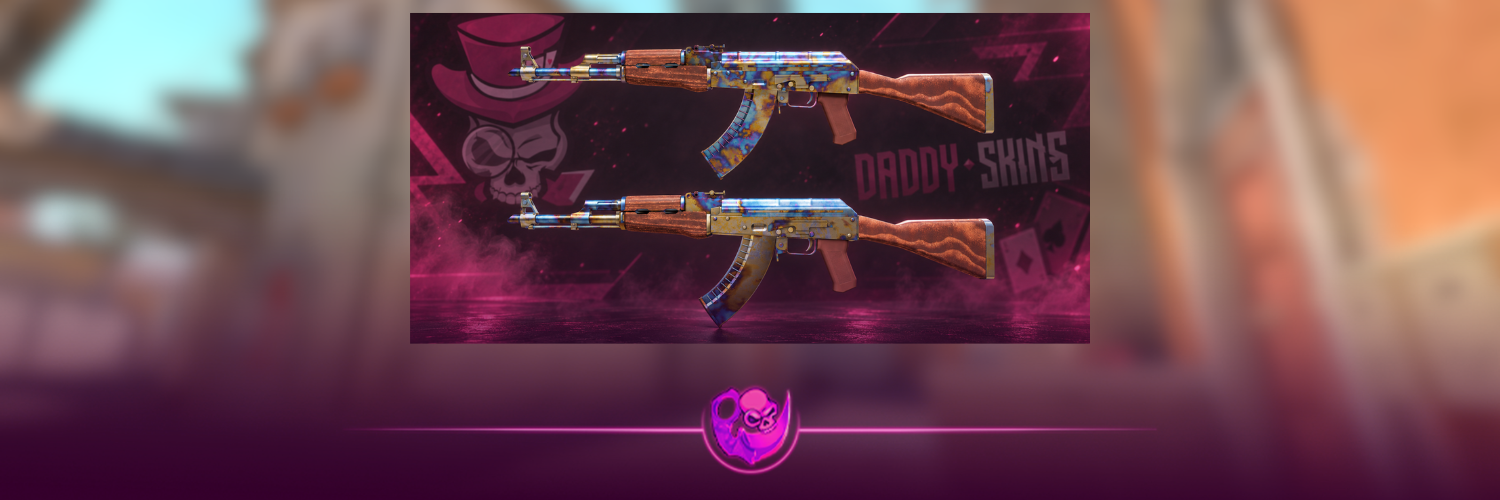
Two CS2 skins can have the exact same weapon, finish and wear rating and still look noticeably different.
Sometimes that difference barely matters.
Other times, it can turn an ordinary skin into one of the most desirable versions of that item.
The reason is the pattern index, commonly called the paint seed or pattern seed.
If you have ever heard players talk about an AK-47 Case Hardened #661, a Blue Gem knife, a high-percentage Fade or a specific Crimson Web pattern, this is the number they are looking at.
In this guide, we are breaking down exactly how CS2 pattern indexes work, which skins actually have patterns worth checking, how pattern differs from float, and how to tell whether a rare-looking seed deserves an overpay.
Quick answer: A CS2 pattern index, or paint seed, determines how a skin’s pattern is positioned on the weapon. The standard skin-pattern convention uses 1,000 possible seeds, commonly numbered 0–999. For most skins, the difference is minor. On finishes such as Case Hardened, Fade, Marble Fade and Crimson Web, the right seed can completely change the appearance and collector demand.
What Is a Pattern Index in CS2?
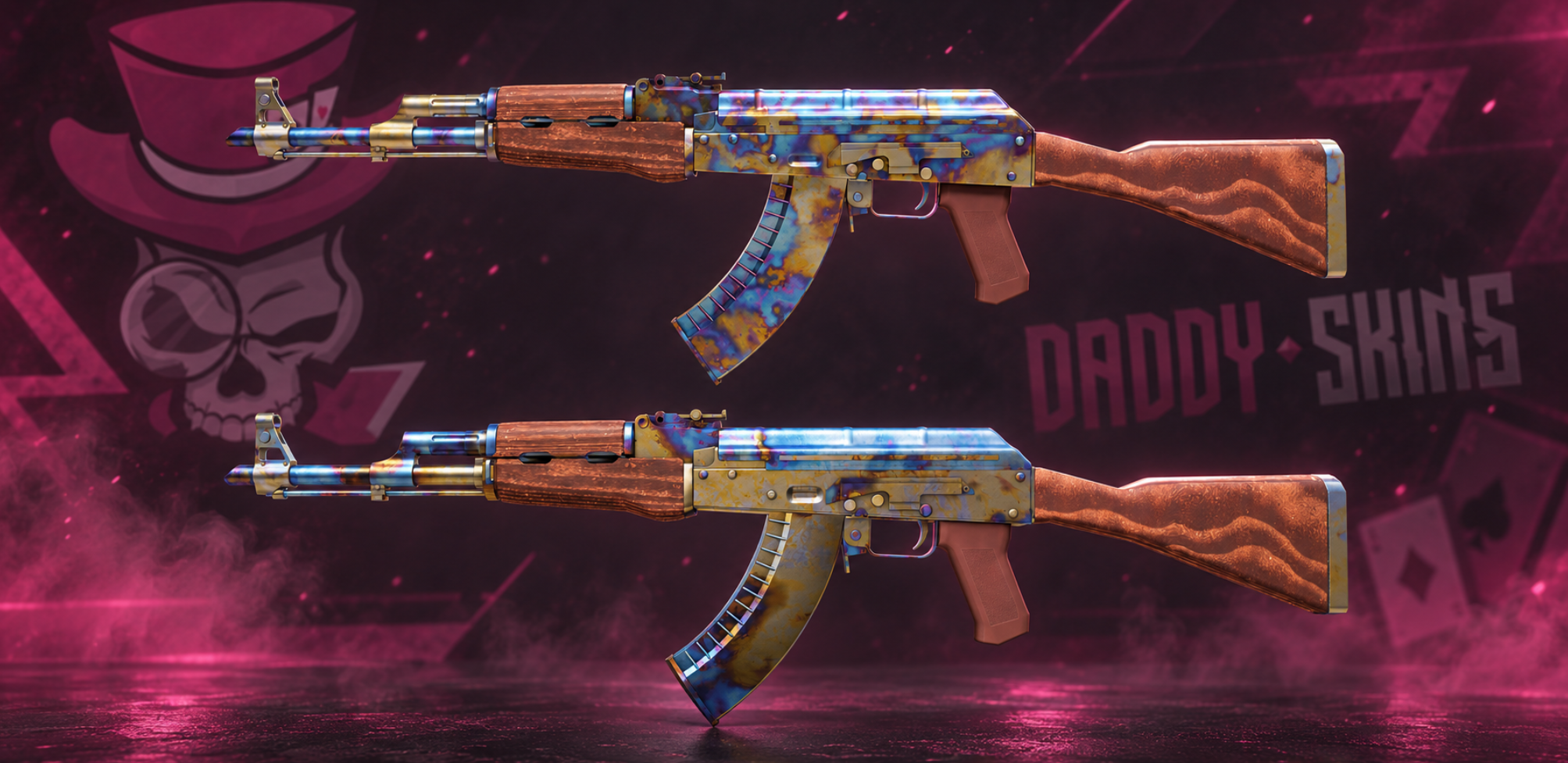
A pattern index is the number that tells CS2 how a patterned finish should be positioned on a particular item.
Think of the skin artwork as a much larger sheet of material.
The weapon model only displays part of that material. The pattern seed helps determine which section is placed on the weapon and how that texture appears across its surfaces.
That is why two copies of the same patterned skin can show different colors or layouts even when their float values are almost identical.
The important part is that the pattern is permanent.
Once an item is generated, its paint seed does not reroll because you trade it, sell it or move it between inventories.
And the number alone does not tell you whether a skin is valuable.
Pattern #500 is not automatically better than pattern #50. What matters is what that exact seed produces on that exact weapon and finish.
Pattern Index vs Float: They Are Not the Same Thing
This is probably the most important distinction to understand.
Your pattern index determines placement.
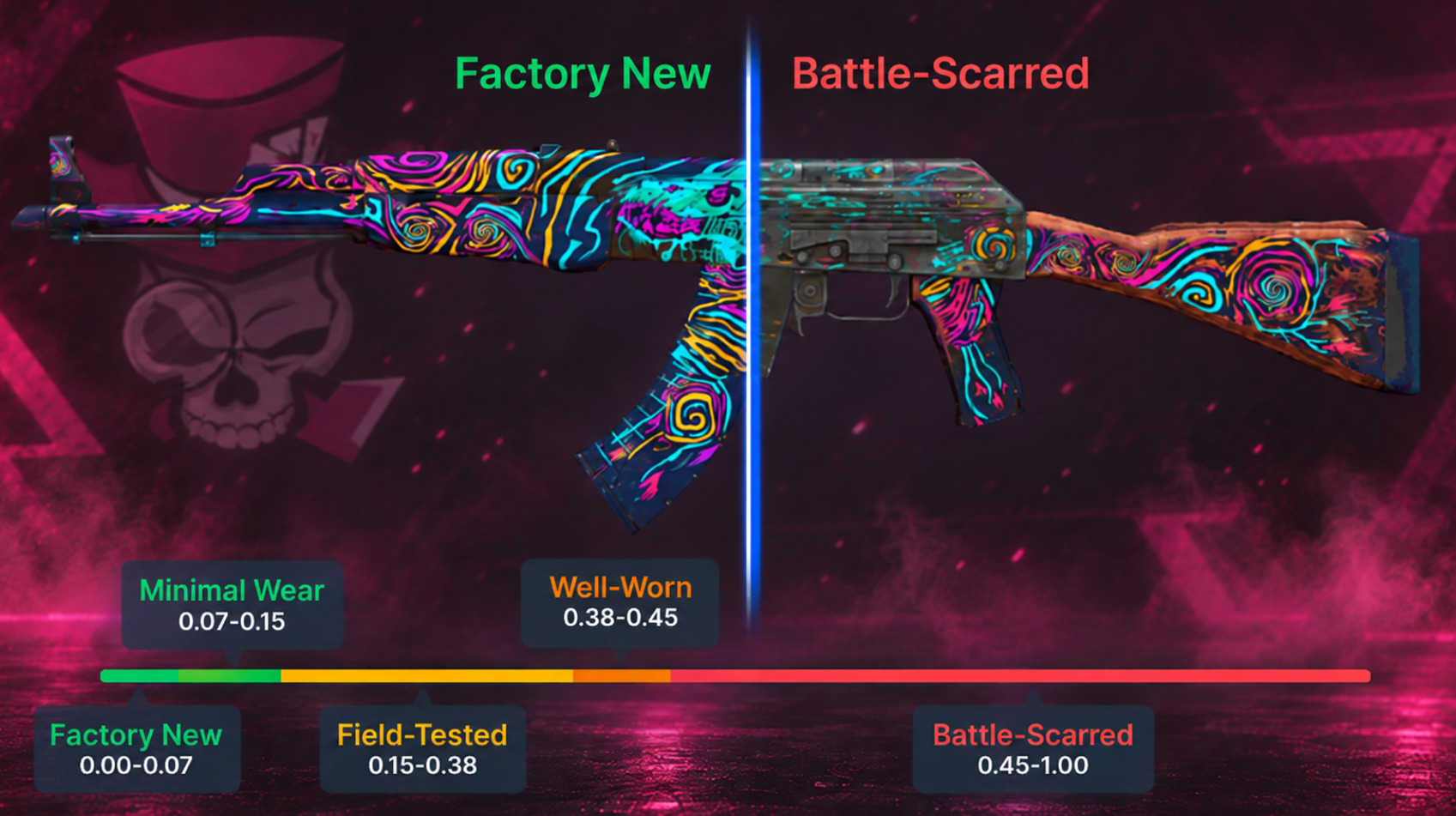
Your float determines wear.
If you need a full explanation of wear values from Factory New through Battle-Scarred, read our
Here is the easiest way to separate the different numbers you will see around CS2 cosmetics:
| Property | What It Controls | Example |
|---|---|---|
| Pattern index / paint seed | Where a pattern or texture appears | Blue placement on Case Hardened |
| Float value | How worn the item is | 0.05 Factory New vs 0.35 Field-Tested |
| Paint index | Which actual finish/paint kit the item uses | Used to distinguish different Doppler phases |
| Rarity | The item’s rarity tier | Restricted, Classified, Covert |
| Charm Template | Visual variation on a charm | Different colors on a Die-Cast AK charm |
That last distinction between paint index and pattern index is especially important.
They sound almost identical, but they are not the same field.
If rarity terminology is still confusing, our CS2 Skin Rarity Order & Colors guide separates rarity, wear, pattern, StatTrak and Souvenir items in one place.
Does Every CS2 Skin Have a Rare Pattern?
No.
This is where a lot of new traders waste time.
A skin may technically have a pattern seed without that seed creating a meaningful collector premium.
If the texture looks almost identical regardless of where it is positioned, nobody is going to pay hundreds of dollars extra because the number says 742 instead of 126.
Pattern hunting matters most when different placements visibly change something collectors care about.
That could mean:
- more blue
- more Fade coverage
- a specific color combination
- better web placement
- a visually cleaner playside
- an established collector pattern
The visual result matters first.
The number is how collectors identify and reproduce that result.
CS2 Skins Where Pattern Index Matters Most
Case Hardened
Case Hardened is the easiest example of why paint seeds matter.
The finish contains blue, gold, purple and silver areas. Changing the pattern index changes which sections of those colors appear on the weapon.
Most Case Hardened skins show a mixture.
A small number of patterns produce unusually large areas of blue. These are the famous Blue Gems.
On the AK-47, pattern #661 is probably the best-known example. Its blue-heavy playside has made the number itself recognizable throughout the CS skin community.
But this is where you need to be careful:
Pattern #661 being famous on an AK-47 does not mean pattern #661 is automatically special on every other Case Hardened weapon.
Pattern value is weapon-specific because the texture sits differently on different models.
For a deeper breakdown of the AK specifically, see our AK-47 Case Hardened & Blue Gem guide.
We also have a separate guide to the cheapest CS2 Blue Gem skins and knives if you want to understand the pattern market without jumping straight into the most expensive collector pieces.
![AK-47 Case Hardened #661 vs a normal mixed Case Hardened pattern]](https://daddyskins.com/blog/wp-content/uploads/2026/09/AK-47-Case-Hardened-661-vs-a-normal-mixed-Case-Hardened-pattern.png)
Fade
Fade skins use a gradient of colors rather than the blue-and-gold texture you see on Case Hardened.
Here the seed changes how that gradient lands on the item.
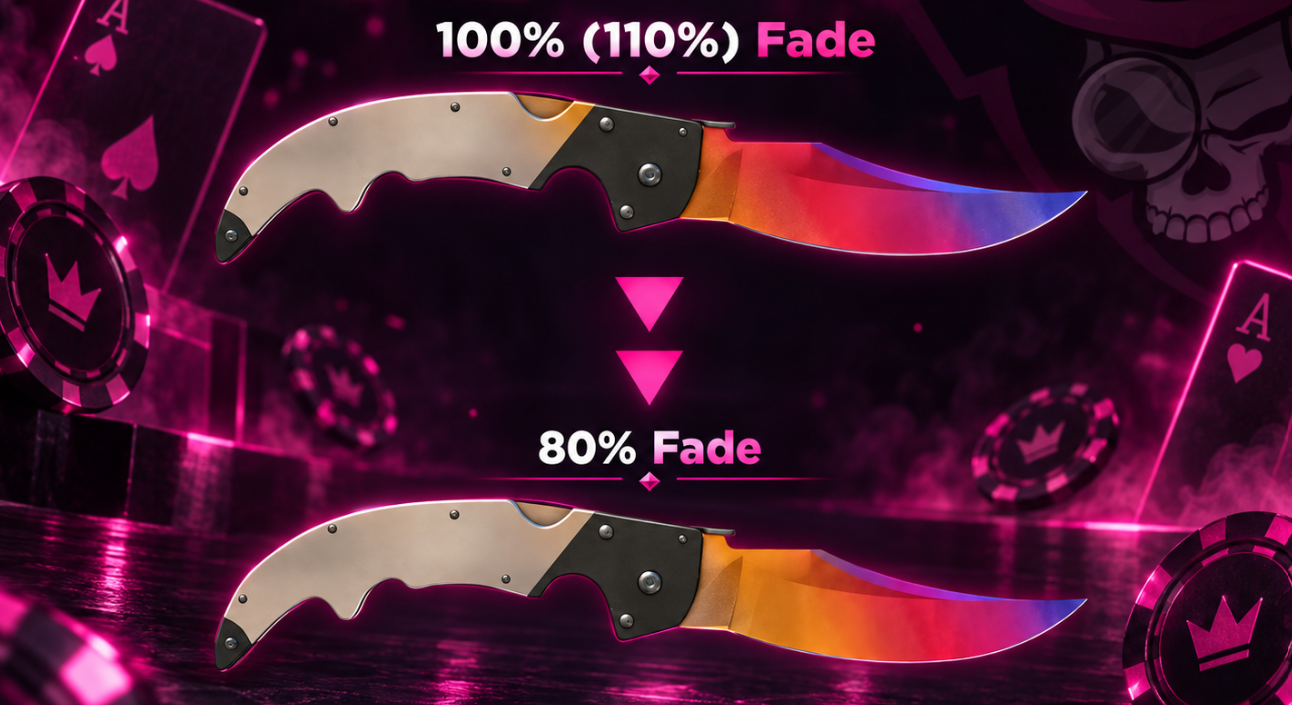
That is why traders talk about Fade percentage.
Two versions of the same Fade skin can have different amounts of the desirable colored gradient visible across the weapon or blade.
A higher Fade percentage can be more desirable, but you should not apply one universal seed ranking to every Fade item. The weapon model matters, and the same seed can produce a different visual result on another item.
The safest approach is to identify the exact skin first, then evaluate the seed or Fade percentage for that specific model.
Marble Fade
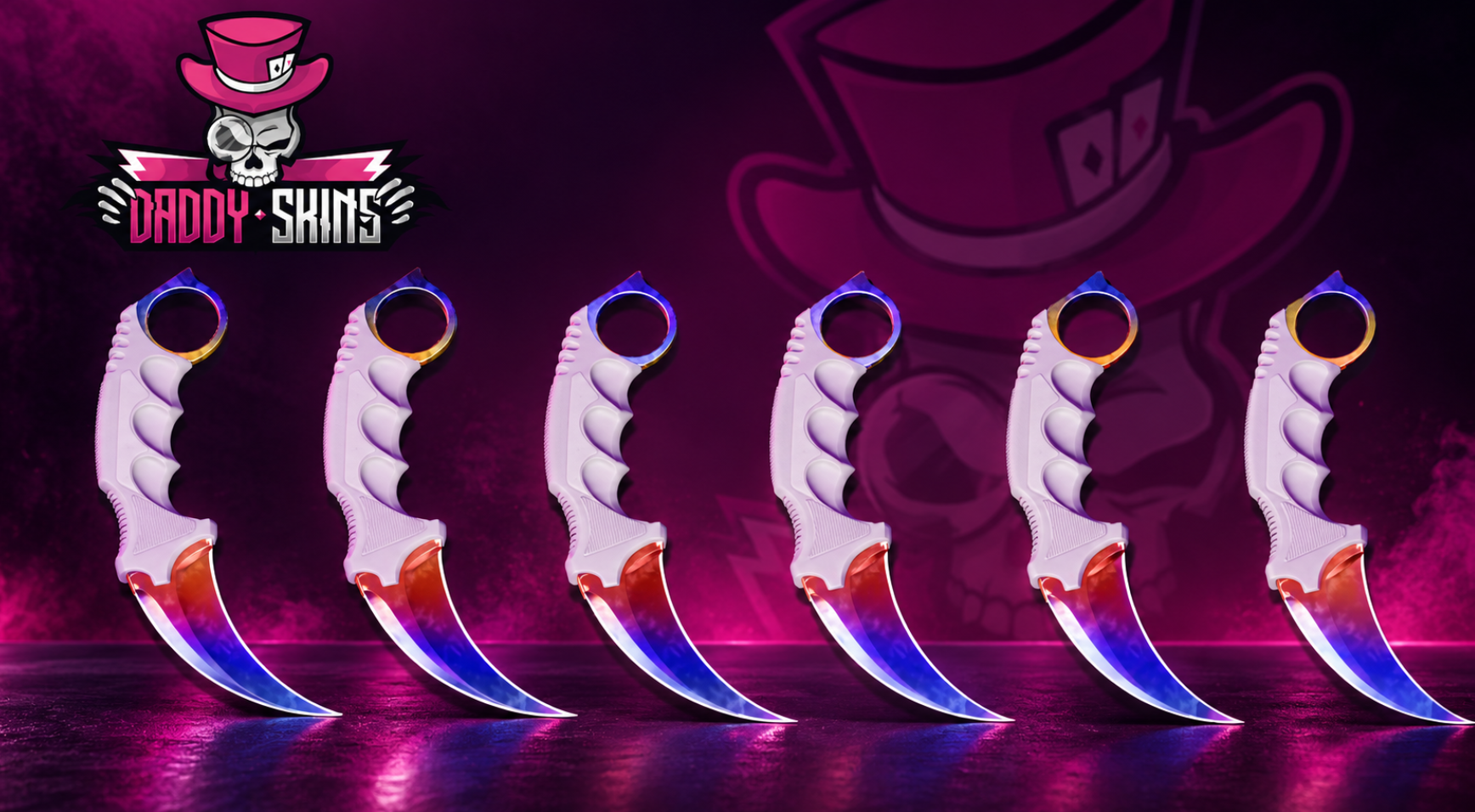
Marble Fade is another finish where pattern placement can noticeably change the appearance.
Its red, blue and yellow sections can land in different proportions and positions depending on the seed.
Collectors have historically paid particular attention to red-and-blue combinations commonly referred to as Fire & Ice patterns.
But a seller writing “Fire & Ice” in a listing does not automatically make the item a premium pattern.
Inspect the actual skin.
Check the seed.
Then compare it with established examples for that specific knife.
Crimson Web
Crimson Web is different again.
Here the interesting part is not blue coverage or Fade percentage. It is the placement of the black web pattern across the red finish.
Collectors may care about how visible the webs are, where they sit and how attractive the pattern looks on the playside.
Float also matters heavily with Crimson Web because wear can change how clean the finish looks.
This is a good example of why pattern and float need to be evaluated together rather than treating one number as the entire value of a skin.
What About Doppler Patterns?
Dopplers deserve their own explanation because this is one of the most commonly misunderstood parts of CS2 skin terminology.
A Doppler phase is not determined by the paint seed.
Phase 1, Phase 2, Phase 3, Phase 4, Ruby, Sapphire, Black Pearl and the related Gamma Doppler variants are differentiated by their paint index, which is the ID of the finish itself.
The pattern seed can still alter the exact way the texture sits within a particular phase, but changing the seed does not turn a Phase 1 into a Sapphire.
That is a completely different property.
Our CS2 Doppler Phases guide goes deeper into the individual variants, but the simple rule to remember here is:
Paint index = which Doppler phase you have.
Paint seed = how that finish’s pattern is positioned.
That distinction can save you from misidentifying an expensive knife.
Why Can the Same Skin Have Different Prices Because of Pattern?
Because collectors are not always buying just the skin name.
They may be buying a very specific version of that skin.
Imagine two AK-47 Case Hardened skins with similar float values.
One has a normal mix of gold, purple and blue.
The other has a famous Blue Gem seed with a heavily blue playside.
Technically, both are AK-47 Case Hardened skins.
To a collector, they are not remotely interchangeable.
The same logic can apply to high-percentage Fades, desirable Marble Fade layouts and well-positioned Crimson Web patterns.
That does not mean every unusual-looking pattern deserves a huge premium.
A pattern needs actual collector demand.
A seller can call practically anything a “rare pattern.” That does not mean buyers agree.
If you are learning how these premiums work, our CS2 Skin Trading for Beginners guide explains the broader relationship between patterns, float, demand and liquidity.
How to Check the Pattern Index of a CS2 Skin
Before paying extra for a supposedly rare pattern, verify it yourself.
Start with the exact item rather than a screenshot.
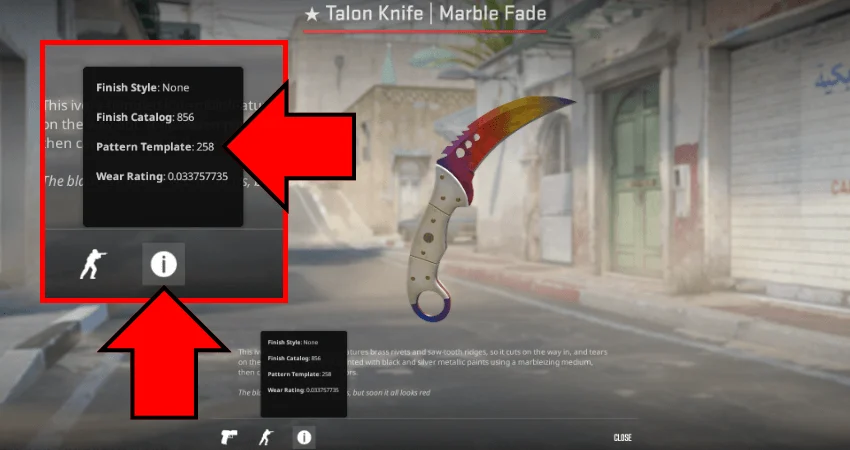
Open or inspect the item and look for its Pattern Template, paint seed or pattern number, depending on the interface or tool you are using.
You can also use reputable skin marketplaces and item databases that display the seed alongside information such as float.
Once you have the number, do not stop there.
Search for that specific seed on the same weapon and same finish.
Then compare the actual appearance.
For an expensive item, inspect it in CS2 rather than judging it only from a marketplace thumbnail. Lighting and viewing angle can make two patterns look much closer—or much more different—than they really are.
Our guide on how to test skins in CS2 before buying them explains how to inspect the exact item in-game before spending money.
How to Tell if Your CS2 Pattern Is Actually Rare
Finding an unusual seed is only the beginning.
There are four questions we would ask before calling any pattern valuable.
First, does the pattern visibly stand out?
If two seeds look practically identical, the number alone probably does not justify a meaningful premium.
Second, is that pattern recognized for this exact skin?
Never take a famous seed from one weapon and assume the same number is valuable on another one.
Third, is there real buyer demand?
Something can technically be uncommon without being desirable.
And fourth, are there actual comparable sales or listings?
A seller asking $5,000 does not prove somebody is willing to pay $5,000.
For expensive patterns, compare the exact seed, float, condition and playside before deciding what a reasonable premium looks like.
Pattern Index vs Pattern Rarity
Another common mistake is confusing a rare skin with a rare pattern.
They are separate things.
A Covert skin does not automatically have a rare pattern.
A cheaper skin can have an unusually desirable seed.
And an expensive skin can still have a completely average seed.
Think of an item’s value as several layers:
Base skin + rarity + float + pattern + special attributes + market demand.
Depending on the item, one of those factors may matter far more than the others.
For a normal skin, float may be the biggest visual difference.
For a Blue Gem, pattern can dominate the conversation.
For another skin, neither pattern nor float may create enough of a difference to justify a premium.
Pattern Index vs Charm Template
Weapon charms create another source of confusion.
Charms have their own Charm Template system.
That template can change the color or visual appearance of certain charms, but you should not assume that charm template numbers work exactly like traditional skin paint seeds.
For example, some charms move through large color ranges as their template number changes.
We break that system down separately in our CS2 Charm Patterns guide.
Keeping these systems separate makes the whole CS2 cosmetic market much easier to understand:
Skin float = wear.
Skin paint seed = pattern placement.
Paint index = finish identity.
Charm Template = charm variation.
Common CS2 Pattern Mistakes to Avoid
The easiest way to overpay for a patterned skin is to focus on the number instead of the item.
A high seed is not automatically better.
A low seed is not automatically rarer.
The same seed does not have the same value on every weapon.
A seller’s nickname is not proof that a skin is a Blue Gem, Fire & Ice or another collector pattern.
And a good pattern does not erase every other factor.
You should still check float, playside appearance, current demand and comparable sales.
Most importantly, inspect the exact item you are buying.
Screenshots can hide scratches, the less-attractive side of the weapon or lighting that makes colors appear stronger than they actually are.
Is Pattern Index More Important Than Float?
Sometimes.
There is no universal answer.
For most CS2 skins, float is more useful because the pattern makes little visible difference.
For heavily pattern-dependent finishes, the situation can reverse.
A desirable Case Hardened seed can be more important to collectors than having the absolute lowest float.
But even on rare patterns, float still matters because it affects the condition of the finish.
The best way to think about it is:
Pattern decides which version of the artwork you received. Float decides how worn that version is.
Neither number replaces the other.
CS2 Pattern Index FAQ
What is a pattern index in CS2?
A pattern index is the number used to determine how a patterned finish is positioned on a CS2 item. Players also commonly call it the paint seed or pattern seed.
Is pattern index the same as paint seed?
In normal skin-trading terminology, yes. “Pattern index,” “paint seed” and “pattern seed” are commonly used to describe the number that controls pattern placement.
Is paint index the same as pattern index?
No.
The paint index identifies the paint kit or finish itself.
The pattern index/paint seed changes the placement of that finish.
The distinction is especially important with Dopplers because the paint index determines the phase.
How many CS2 pattern seeds are there?
The standard skin-pattern convention contains 1,000 possible seeds, normally referenced as 0 through 999.
Does a higher pattern index mean a better skin?
No.
The number has no simple high-is-better ranking.
Pattern #950 can be ordinary while a much lower seed can produce a famous collector pattern.
Can a skin’s pattern index change?
No. Once an individual item is created, its paint seed remains attached to that item.
Do all CS2 patterns affect price?
No.
For most skins, seed differences are either subtle or not desirable enough to create meaningful market premiums.
Pattern matters most on finishes where placement creates major visual differences.
What are the most famous rare CS2 patterns?
Case Hardened Blue Gems are the best-known example, followed by sought-after Fade percentages, Marble Fade layouts and certain Crimson Web patterns.
What is the famous AK-47 Case Hardened pattern?
Pattern #661 is one of the most famous AK-47 Case Hardened Blue Gem seeds because of its distinctive blue-heavy playside.
Should I pay extra for a rare pattern?
Only after verifying that the seed is desirable on that exact weapon, inspecting the skin yourself and comparing real market demand.
A rare-looking number alone is not enough.
Final Thoughts
Pattern indexes are one of the reasons CS2 skins can be much more complicated than their names suggest.
Two items can share the same weapon, finish and wear rating while collectors value them completely differently because of one paint seed.
The important thing is not memorizing hundreds of numbers.
It is understanding when the number actually matters.
Check the exact skin.
Check its pattern.
Check its float separately.
Inspect how it looks in game.
And if somebody is asking for a big pattern premium, verify why that particular seed deserves it before paying.
Once you understand that system, Blue Gems, Fades, Marble Fades and other rare-pattern skins become much easier to evaluate.