
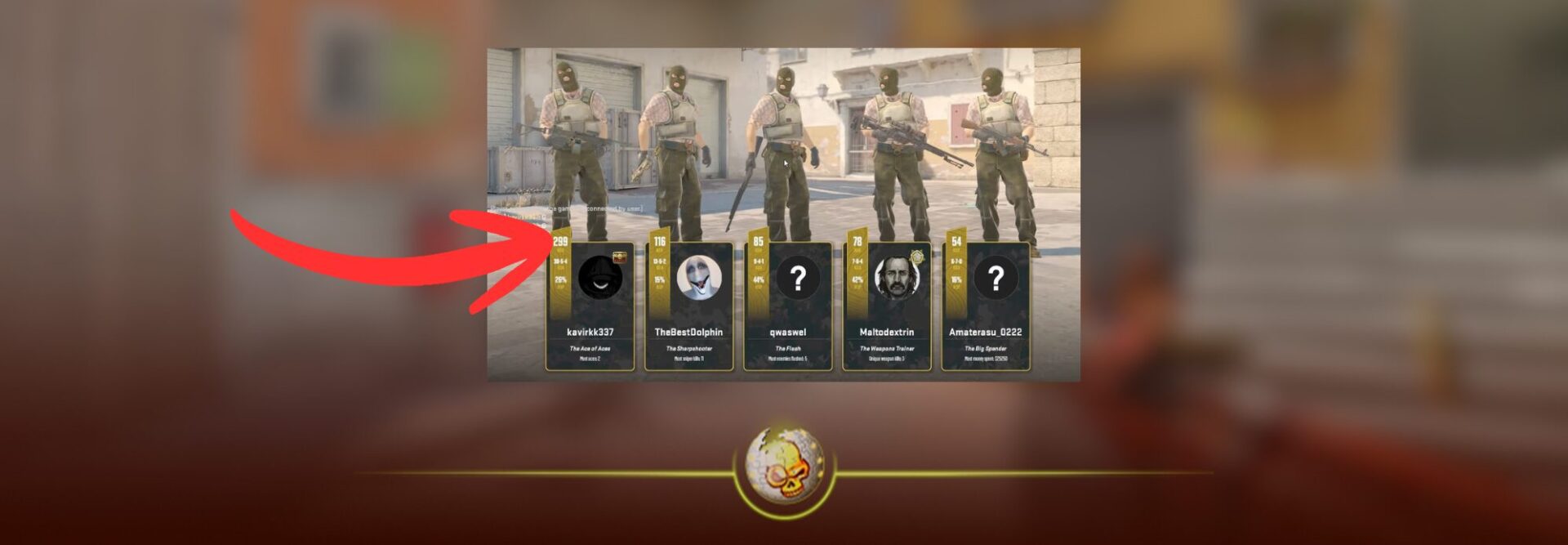
If you have ever finished a CS2 match thinking I swear I was doing work but my kills do not show it, ADR is the stat that usually tells the real story.
ADR means Average Damage per Round. It measures how much damage you deal to enemies, on average, each round. Higher ADR usually means you are consistently weakening enemies, opening rounds, and setting up easier trades for your team, even when you are not always the one landing the final shot.
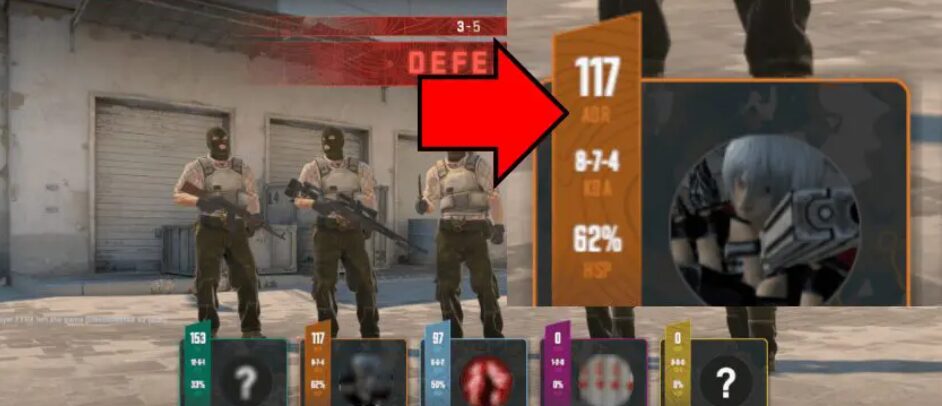
What ADR actually stands for
ADR is short for Average Damage per Round.
Think of it like this
Every round you play, you deal some amount of damage. ADR takes your total damage across the match and divides it by the number of rounds played.
The simple formula
ADR = Total damage dealt ÷ Rounds played
Example
You dealt 1650 damage in a 24 round match
1650 ÷ 24 = 68.75 ADR
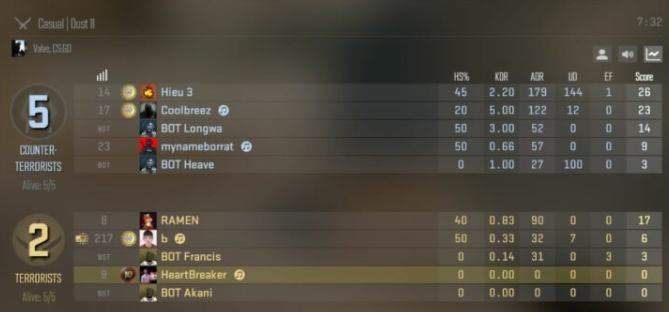
Where to see ADR in CS2
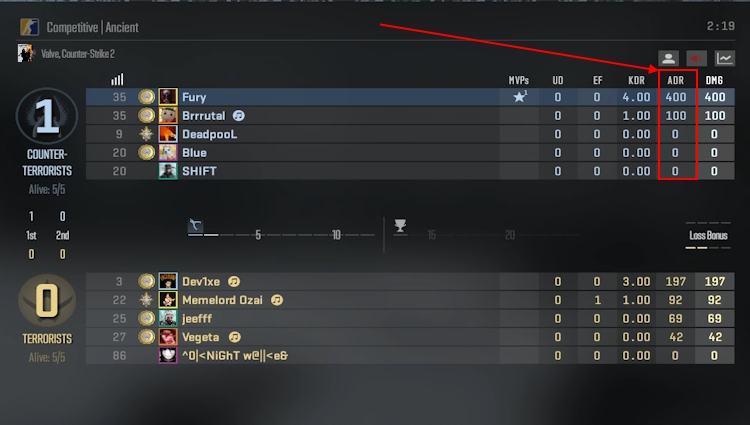
In CS2, ADR is shown on the scoreboard and in match results, alongside your other stats like kills and assists.
Tip
If you are comparing players in the same match, ADR is very useful because everyone played the same number of rounds, so the comparison is clean.
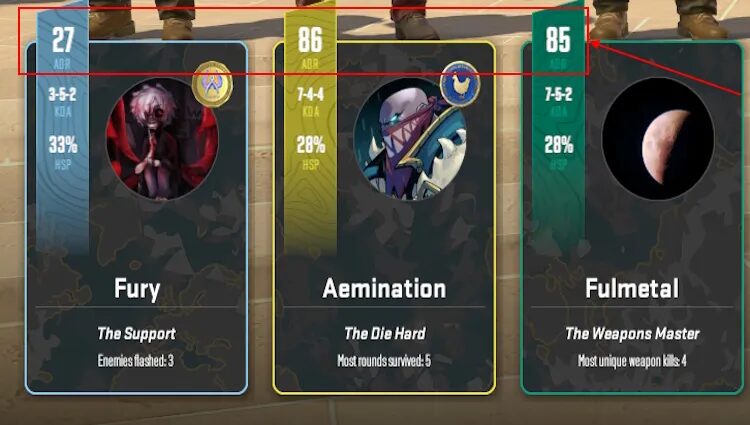
Why ADR matters more than people think
Kills can be misleading.
You can finish a match with a modest kill count but still be the reason rounds are won because you are
1 tagging enemies early
2 forcing them to waste utility
3 leaving them one bullet for your teammate
4 softening bombsite anchors before the hit
That impact shows up in ADR. That is why it is used widely in pro and stat tracking communities as a core performance indicator.
What is a good ADR in CS2
There is no single perfect number because roles matter. An entry fragger and an AWP player often produce damage differently. Still, these ranges are a good practical guide for most players in matchmaking.
| ADR range | What it usually means |
|---|---|
| Under 50 | Not dealing consistent damage, often losing fights early |
| 50 to 70 | Contributing some damage, but not enough impact in key rounds |
| 70 to 90 | Strong and consistent damage, usually a solid carry level |
| 90 plus | Very high impact, regularly winning duels or heavily chunking enemies |
Entry fraggers and aggressive riflers tend to have higher ADR, while passive anchors or dedicated AWPers may sit slightly lower without necessarily playing poorly. Context always matters.
ADR compared to other stats
ADR is best used alongside other statistics rather than on its own.
Kills show who finishes fights.
ADR shows who shapes fights.
KAST reflects consistency across rounds.
ADR reflects raw damage output.
Ratings combine several elements, and damage is usually a major factor in those calculations.
If your ADR is high but your kills are average, it often means you are doing the hard work without always getting the credit. If both are low, it usually signals positioning or decision making issues.
What actually increases ADR
Improving ADR does not mean playing recklessly or chasing damage. The biggest gains usually come from smarter fundamentals.
Consistently landing first bullet damage is one of the fastest ways to raise ADR. Even a single clean tag changes the round.
Using utility properly also plays a major role. Well placed HE grenades, molotovs that force movement, and flashes that enable clean duels all contribute to damage without unnecessary risk.
Trading correctly matters more than chasing solo plays. Being close enough to deal damage when a teammate engages often boosts ADR naturally.
Finally, positioning matters. Playing angles where contact actually happens will always generate more meaningful damage than sitting passive and rotating late every round.
Common misunderstandings about ADR
A high ADR does not automatically mean you played perfectly. Damage dealt after a round is already lost has less value than early or mid round damage.
Likewise, a lower ADR does not always mean poor play. Some roles prioritize survival, information, or late round decision making over raw damage.
ADR should be read as a signal, not a verdict.
How to use ADR to improve
Instead of chasing a specific number, use ADR as feedback.
If your ADR is low, review how often you die without dealing damage.
If your ADR is high but wins are not coming, look at when the damage happens.
If your ADR fluctuates heavily, consistency is likely the issue.
Tracking ADR over multiple matches gives a far clearer picture than judging a single game.
Read More From Daddyskins
- CS2 Mic Not Working – How to Fix in 2 Minutes
- How to Reverse Trade CS2
- How to Trade Up to a Knife in CS2: Complete Step-by-Step Trade-Up Guide (2025 Update)
- CS2 Trade Reversal Guide: How to Undo a Steam Trade?
- CS2 Cheapest Mil Spec Skins To Start A Trade Up Path To Covert
- CS2 Trade up Calculator (How Do They Work)
- CS2 Trade Up Odds From Covert To Knives, Explained
- Who is Donk CS2?
- Cheapest Coverts CS2 to Upgrade (UPDATED, November)
- Are CS2 Skins Still a Good Investment in 2025
- Is CS2 Down How To Check Server Status Instantly
- Knife and Glove Trade Ups in CS2 How to Turn 5 Covert Skins into a Specific Item
- CS2 Skin Float and Wear Explained Full Guide to Float Values, Wear Ratings, and Prices
- CS2 Skin Trading for Beginners
- How to Show FPS in CS2?
- Best CS2 Plays of 2025
- Best CS2 Settings Guide 2026
- Where To Watch The Grand Final Of The StarLadder Budapest Major CS2
- How to Unlock Premier Mode in CS2
- Cheapest CS2 Gloves 2025 [UPDATED]
- Prediction for MOUZ vs FaZe — StarLadder Budapest Major 2025 Playoffs
- CS2 Trade up Contracts Full Guide
- CS2 Major Budapest Results Vitality Win StarLadder Major Back to Back
- How to test skins in CS2 before buying them
- How to Get the 2025 Service Medal in CS2
- What Is Follow Recoil in CS2 Guide for Better Spray Control
- Abertura de Caixas CS2: Guia Completo
- DaddySkins Interview
- CS2 Removes All Rare Case Drops From the Active Drop Pool
- Cheapest Red Skins CS2 (UPDATED)
- Top 5 Rarest CS2 Cases Right Now
- CS2 Removing Cases by 2026
- ropz CS2 Settings, Crosshair, Config & Gear (2025)
- CS2 to Valorant Sens Converter How to Match Your Sensitivity Exactly