Cobblestone is one of those Counter-Strike maps that people still talk about like it never really left.
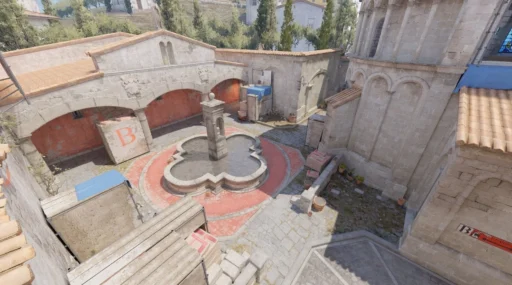
Even in 2026, players still search for CS2 Cobblestone callouts because the map has such a strong history. It was iconic in CS:GO, it had some of the most famous souvenir drops in the game, and it gave us one of the most recognizable layouts ever: long routes, a huge B site, Drop, danger, connector, platform, A long, and all those awkward medieval corners where someone is always hiding with a shotgun.
Cobblestone is not a map you can just run around on and hope your aim carries you. The rotations are long, the sites are wide, and if your team does not know the basic callouts, the whole round gets messy fast.
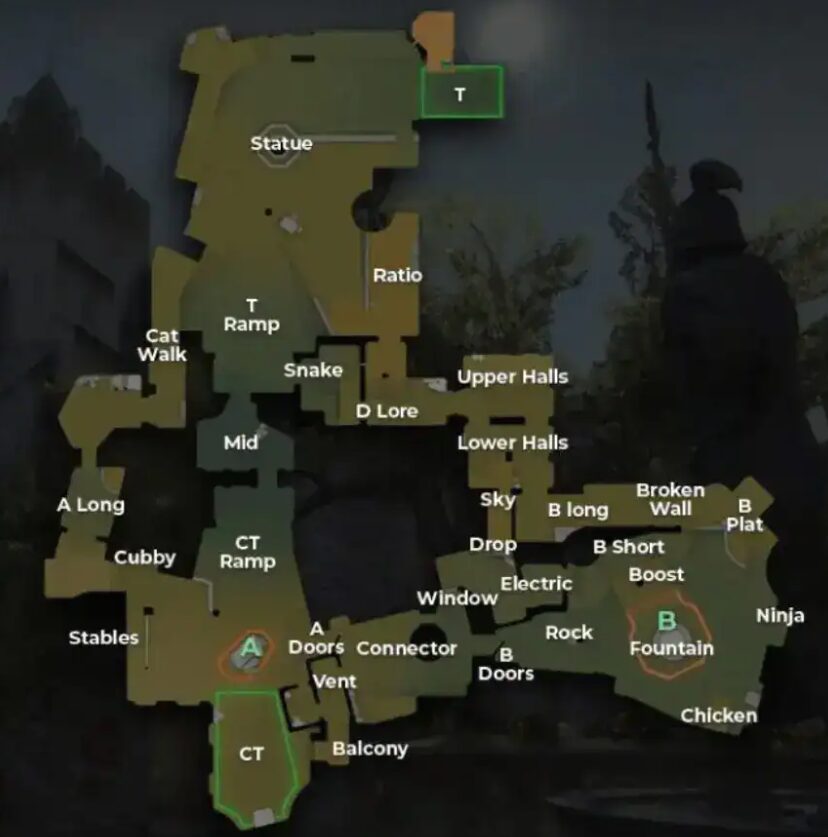
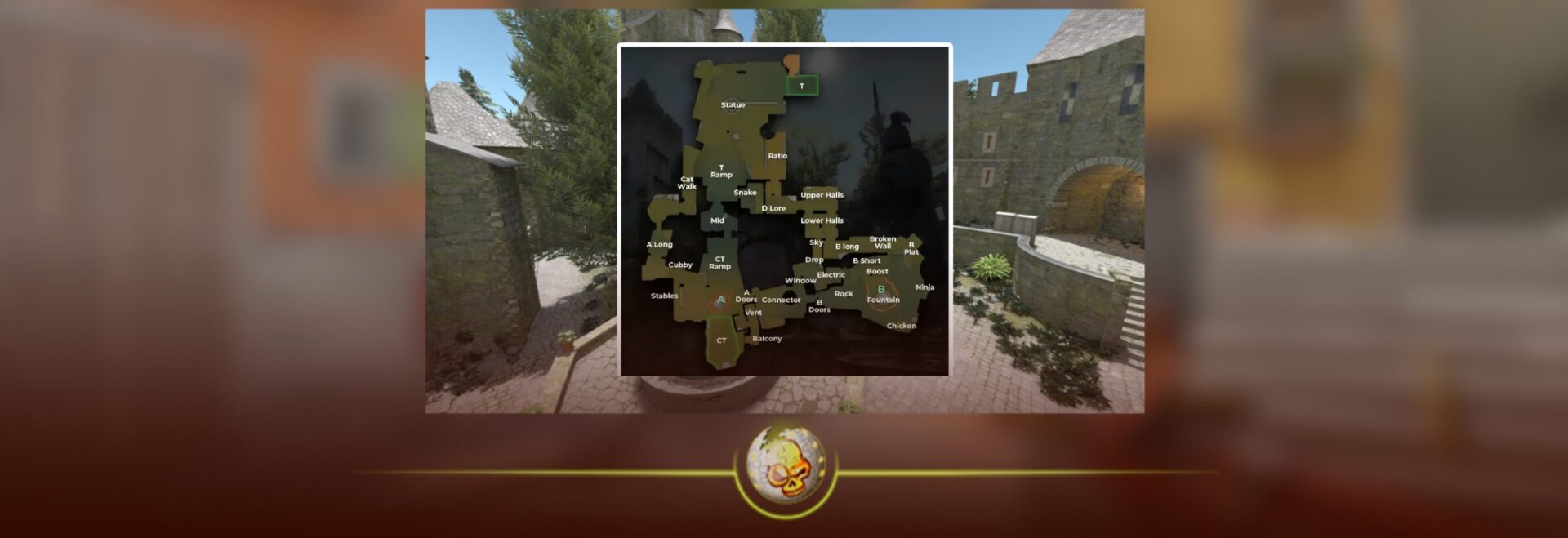
This guide breaks down the main Cobblestone callouts in a simple way, so you can use the interactive map properly, understand the key areas, and give better comms if you are playing workshop versions, older versions, community servers, or just getting ready in case Cobblestone returns to CS2 officially.
If you are learning more maps, you should also check our guides on CS2 Mirage Callouts, CS2 Nuke Callouts, CS2 Inferno Callouts, and CS2 Dust 2 Callouts.
Why Cobblestone Callouts Matter
Cobblestone is a big map. That is the first thing you notice when you play it.
The distance between A and B feels huge compared to maps like Mirage or Inferno. If the CTs over-rotate, the Terrorists can punish them. If the Ts take too long, CTs can stack the right site and make the round impossible.
That is why clean callouts matter so much.
Saying “one over there” on Cobblestone helps nobody. Is he B Long? Platform? Drop? Chicken? Connector? Danger? A Long? Statue? The exact callout tells your team where to aim, where to rotate, and what utility to throw.
Cobblestone also has a lot of old-school names that players still use. Some names come from the map layout, some from objects, and some from years of community habit. You do not need to know every tiny callout on day one, but you should know the main zones.
If you are trying to improve your general map awareness too, read our how to get better at CS2 and CS2 beginner guide.
Main Cobblestone Callout Areas
The easiest way to learn Cobblestone is to split the map into big sections first.
| Area | Main Callouts |
|---|---|
| A Site | A Site, A Long, Statue, Balcony, Truck, Stables |
| B Site | B Site, Platform, Chicken, Back Site, Broken Wall |
| Mid | Mid, Connector, Danger, Underpass |
| Drop Area | Drop, Drop Room, Window, Electric |
| T Side | T Spawn, B Long, Upper Halls, Lower Halls |
| CT Side | CT Spawn, Courtyard, Rotation, Arch |
Once you know these areas, the map becomes way easier to understand. You are no longer just memorizing random names. You are learning the routes players actually use.
A Site Callouts on Cobblestone
A site is usually the quieter bombsite on Cobblestone compared to B, but that does not mean it is easy to hold.
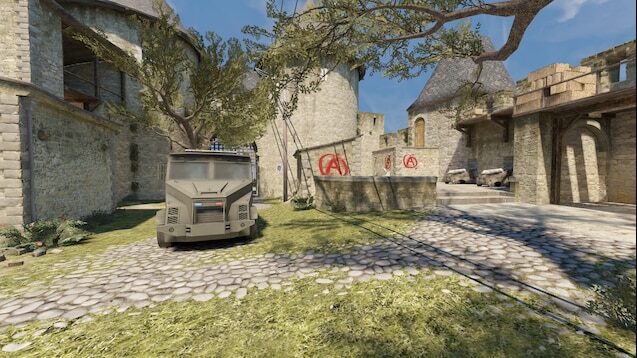
The main A site callouts are A Site, A Long, Statue, Balcony, Truck, Stables, and A Ramp.
A Long is the long route that Terrorists use to pressure A. If your teammate says “one A Long,” it usually means someone is slowly walking up or trying to take control before committing to the site.
Statue is one of the most recognizable spots near A. Players can hide around it, use it for cover, or swing from it during retakes.
Balcony is the raised area around A. It gives players a better angle into the site and can be annoying to clear if you are entering without flashes.
Truck is another important A callout because it gives cover and can be used during post-plants or retakes. If the bomb is planted for Long, Truck and A Long become very important.
Stables is a classic Cobblestone callout near the A side rotation area. It is one of those spots where CTs can play passive, listen for steps, and delay the push.
A site on Cobblestone is all about spacing. If the Ts walk out one by one, they get picked apart. If they use flashes and trade properly, A becomes much easier to take.
For better utility practice, check out our How to Practice CS2 Smokes guide and CS2 Smoke Practice Commands guide.
B Site Callouts on Cobblestone
B site is the heart of Cobblestone.
Most players remember Cobblestone because of B. It is big, open, chaotic, and full of angles. If you do not know the callouts here, retaking or defending B can feel impossible.
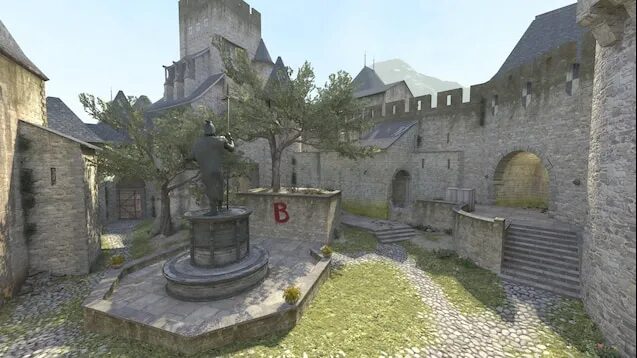
The main B callouts are B Site, Platform, Chicken, Back Site, Broken Wall, B Long, and Tree.
Platform is one of the most important B callouts. It is the raised area near the site where players often hold angles, plant, or play post-plant.
Chicken is a classic corner near B site. It is one of those spots that always needs to be cleared because players love hiding there when the site gets messy.
Back Site means the deeper area of B where CTs or post-plant Ts can tuck in and play time.
Broken Wall is another key callout around B. Players can use it for cover, and it is often part of site fights when Ts come in from B Long.
B Long is the long route leading toward B. This is one of the most important paths on the map because a lot of B hits start here.
If your team loses B Long control for free, B becomes very hard to defend. If your team keeps control or at least delays the push, CTs have way more time to rotate.
If you want to get better at fighting these wide site angles, read our CS2 Crosshairs Guide and Best CS2 Settings for 2026.
Drop Callouts on Cobblestone
Drop is probably the most famous Cobblestone callout.
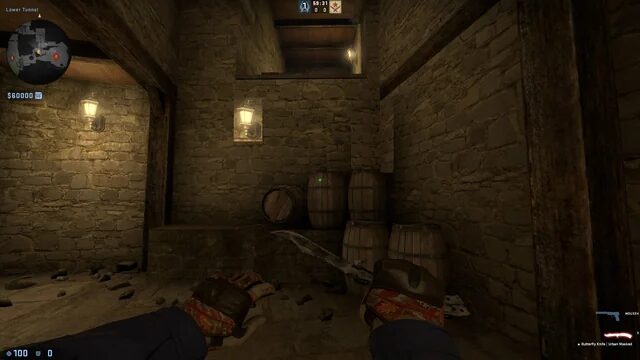
It is the room that lets Terrorists drop down into a dangerous position between the map’s middle and B side. If Ts get Drop control, they can split B, pressure rotations, and force CTs to worry about multiple entrances at once.
The main Drop callouts are Drop, Drop Room, Window, and Electric.
Drop Room is the upper room before the actual drop. Ts can hold here, throw utility, or wait for a timing.
Drop is the actual lower area players fall into. Once someone drops, they are committed, so the call needs to be fast.
Window is the small window area around Drop. Players can peek through it, hold angles, or use it to spot movement.
Electric is another common callout around the Drop area. It is useful when players are tucked close and your team needs exact info.
Drop control can completely change a Cobblestone round. A B player cannot just stare at B Long if enemies might come out Drop at the same time. That is why a simple call like “two Drop” can save the entire round.
Mid, Connector, and Danger Callouts
Cobblestone has a weird middle area compared to other CS maps.
It is not like Mirage Mid where everyone fights for window and connector. Cobblestone Mid is more about rotations, pressure, and linking parts of the map together.
The main callouts here are Mid, Connector, Danger, and Underpass.
Connector links different areas of the map and helps players rotate between sites.
Danger is one of the most important Cobblestone callouts because it leads toward B and can be used to split pressure. If someone is in Danger, your B players need to know quickly.
Underpass is another route that can create timing plays. If enemies slip through and nobody calls it, they can appear in uncomfortable spots and catch rotations.
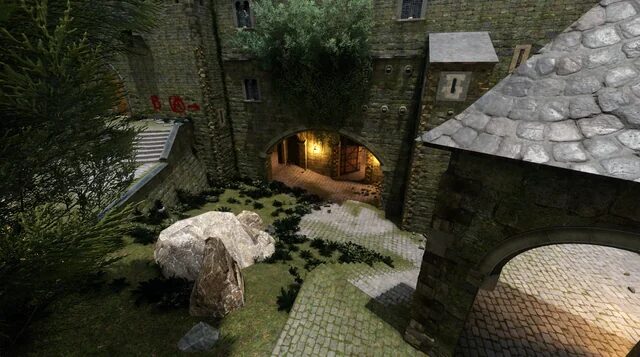
These areas are not always where the bomb ends, but they decide how much control each team has. Good teams use these routes to fake, split, and punish bad rotations.
For more map control basics, check our CS2 Premier Ratings Explained 2026 and FACEIT vs Premier CS2 guide
Best Way to Learn Cobblestone Callouts
The best way to learn Cobblestone callouts is to start with the important ones first.
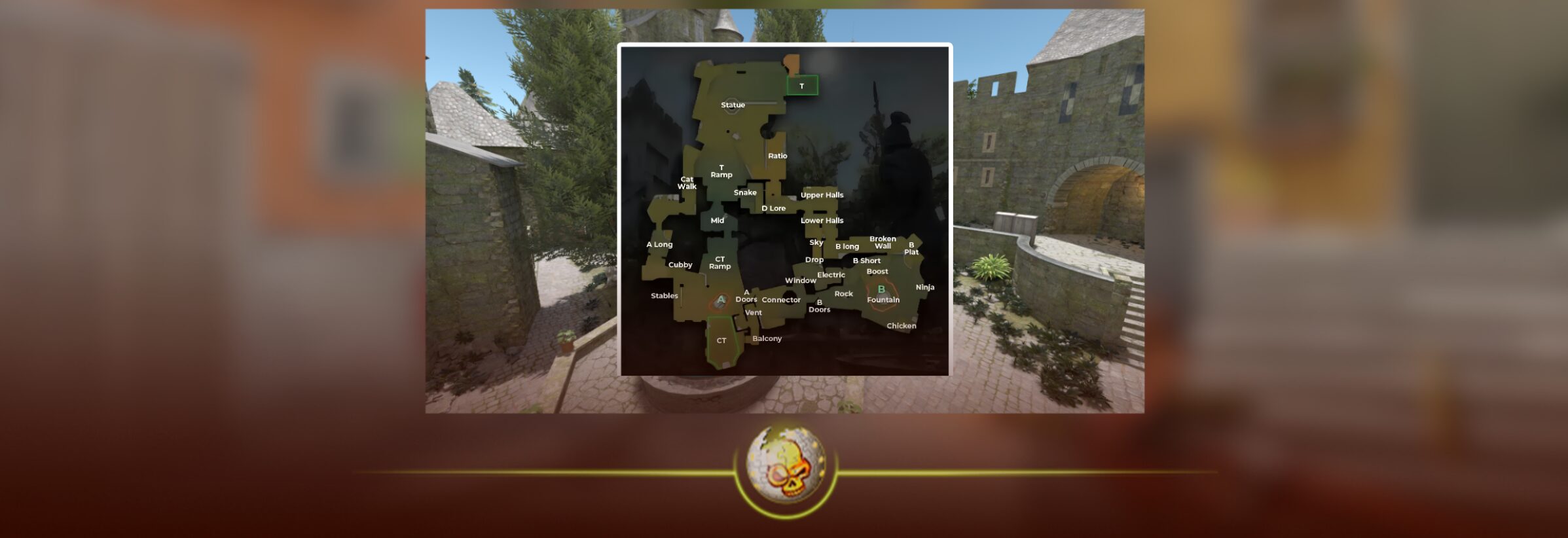
Do not try to memorize every single tiny corner right away. Start with A Site, B Site, B Long, Drop, Platform, Chicken, Connector, Danger, A Long, Statue, and CT Spawn.
Once those feel natural, add the smaller names like Electric, Window, Stables, Broken Wall, Balcony, and Underpass.
The best trick is to open an interactive Cobblestone callout map while watching gameplay or walking around the map yourself. Every time you enter a new area, say the callout out loud. It feels simple, but it makes the names stick way faster.
You can also practice with friends in a private server. Run around the map, call random spots, and quiz each other. It is way better than trying to learn everything from a screenshot.
If you are building your full CS2 knowledge, also check our CS2 Ranks Explained and CS2 Bunny Hop Commands 2026.
Final Thoughts on CS2 Cobblestone Callouts in 2026
Cobblestone might not be the main map everyone is grinding in Premier right now, but it is still one of the most loved maps in Counter-Strike history.
And if you ever play it on a workshop version, community server, old demo, or future CS2 update, knowing the callouts will make the map way more enjoyable.
Focus on the big areas first: A, B, Drop, B Long, Connector, Danger, and CT Spawn. Then start adding the smaller calls as you play more.
Cobblestone is a map where good comms make a huge difference. One clear call can stop a B split, save a rotation, or help your teammate win a retake.
So keep the interactive map open, learn the names slowly, and do not overthink it. Once the callouts start feeling natural, Cobblestone becomes way easier to read.