

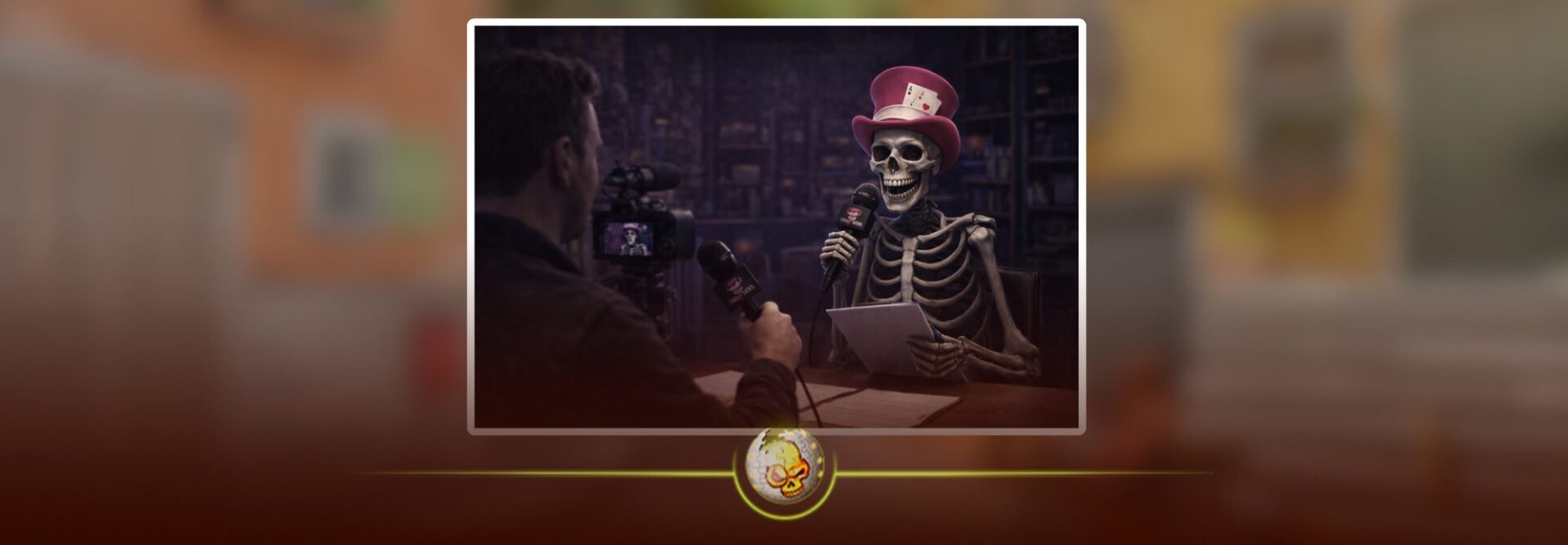
This is Part 1 of a long form interview with the founder of DaddySkins. We talk about the early days of CS GO case opening, the scams, the chaos, and how the industry evolved from dorm room projects into full scale platforms.
Hi DAD, how’s it going? Thanks for being the first to do this — we really believe people will find your story interesting. So, let me begin… Let’s rewind a bit. What did the CS:GO case-opening world look like when you first stepped into it?
Honestly? Imagine a server full of players running around with Deagles but no armor, no economy, no smokes, no rules — just pure, unfiltered chaos. That was the case-opening scene. Today everyone flexes fancy UIs, transparency reports, fairness algorithms, compliance badges, big middle east millionaires fund the sites. Back then you were lucky if the site didn’t disappear while you were typing your username.
“The Stone Age — A World Built in Dorm Rooms”
Most “projects” in those days were born in Russian dorm rooms — literally two sleepless students copy-pasting code they found somewhere on the internet, praying that the site stayed alive long enough to make maybe $500 before blowing up. The workflow was always the same: they’d find some old roulette script on GitHub, change a few colors to neon green, slap a dragon logo on top, add the word “moon” or “case” to the domain, scam the first deposits, vanish, and wake up the next morning ready to repeat it all on a fresh domain.
The entry barrier was so low it felt like a limbo bar. Scam sites weren’t even trying to hide — they were everywhere. You could practically smell the PHP across the map. But here’s the funny part: the players weren’t stupid. They were just hopeful. Everyone wanted that one magical site that wasn’t fake, didn’t rig everything, didn’t vanish after the first withdrawal request. And honestly, we saw that pain point immediately, like a neon sign screaming in all caps.
The Big Names of That Era
It wasn’t only dorm-room projects, though. There were giants too — or at least what passed for giants back then. Drakemoon was basically the Pokémon of case opening. Wildcase was big, flashy, and chaotic. Csgolotto — well, we all know how that story ended once the scam was revealed. g4drop also went down the same road. A few others had insane traffic but even bigger mysteries behind them.
Some of those “giants” collapsed under their own scams. Others got destroyed by Valve’s updates — and trust me, a serious Valve update hits harder than a Nova to the chest at point-blank range. And then there were Farmskins, Hellcase, and a couple of others that somehow, against all logic, survived everything like cockroaches in a nuclear fallout. That era was a battlefield, and only a handful of legit platforms crawled out alive.
“The Industry Today: From Caveman Servers to Full Corporations”
Fast forward to today and the entire industry looks like it aged 20 years in 5. Players became smarter, louder, more demanding, and way less forgiving. They started checking everything — odds, fairness, transparency, drop rates, license info, region compliance, payment legitimacy, platform history, influencer authenticity. That pressure actually helped the whole space evolve.
But with smarter users came heavier responsibilities. Suddenly you’re juggling regulations, strict payment provider rules, AML requirements, compliance audits, KYC expectations, anti-fraud systems, government attention, and daily fires so random you couldn’t predict them even if you had a wallhack for life.
You can’t “just launch a case site” anymore. Now you need proper servers, real monitoring, logs, financial controls, legal oversight, security layers, DevOps, infrastructure that won’t explode under pressure, 24/7 support, and — maybe most importantly — the sanity to deal with all of that without jumping out a window.
DaddySkins had no choice but to evolve. When we launched, our “team” was basically two developers, one marketing person who had absolutely no idea what marketing even meant, and a single Google Doc titled “IMPORTANT STUFF,” which, I swear, was completely empty. Today it’s developers, QA engineers, business analysts, a legal team, a finance team, anti-fraud specialists, compliance experts, marketing, branding, payments managers, and system architects. We went from a two-and-a-half-man silver team to a full five-stack of globals… and we needed every single one of them.
And of course, today most of the sites operate under a provably fair system — at least on paper.
Some still “technically” have it, but behind the scenes they use their own internal mechanisms instead of real third-party solutions.
I have to say, one of the biggest shoutouts goes to Monarch, who pushed the whole industry to adopt a proper provably fair system..
You can feel however you want about him, but I still remember that chat with Monarch and either Sparkles or Juicy, where we were discussing that we must set up a real provably fair system if we want to differentiate ourselves from the scammers. The market players, such influencers, site owners literally decided to self regulate themselves.. Wasn’t that cool?
“The Real Risk — Not For Players, But For Us”
People outside the industry imagine sites like ours are just sitting there printing money. The reality couldn’t be further from that fantasy. Every single week brings a new “mini-apocalypse.” One day it’s a brand-new scam attempt we’ve never seen before, the next it’s a payment provider randomly changing their rules, or a regulation update from some country we didn’t even know was watching us. Then a CS2 update drops and breaks half of Steam’s logic overnight. Then a bot attack wave hits. Then some legal interpretation shifts how payouts have to work. Then AML requirements change. Then new compliance documents show up. Then some totally unpredictable fraud pattern appears. Then we get a YouTube advertising rule change. Then a brand-new Chinese site appears offering “5000% profits” only to vanish a week later, which hits you hard …
It’s endless. Running a case-opening site is like defusing a bomb every Monday… and usually again on Tuesday… and absolutely again on Friday. But every challenge forces you to evolve. You can’t sit still. You can’t get comfortable. You can’t stay in Stone Age mode.
And believe me or not, margin wise I’d feel more comfortable owning a bakery chain or a small winery .. But, I’m the tech guy bro and daddyskins is my grown child.
So Why Did DaddySkins Survive When Others Didn’t?
Honestly? Because we didn’t treat this as a toy.
We didn’t wake up one day and say, “Let’s make a quick buck and disappear.”
We built DaddySkins with the mindset of, “Let’s create something that survives longer than the next Valve update,” which is a very ambitious target in itself. But remember, some sites had the professional teams to launch the site, we had 2.5 people, one of which didn’t even know what the giveaway word means..
We made mistakes — a lot of them. We learned everything on the go. We upgraded, rebuilt, redesigned, refactored, and re-organized more times than I can count. We hired people we didn’t even know we needed until the moment everything was on fire. Other sites got stuck in 2017. They didn’t modernize, didn’t scale, didn’t care about compliance, didn’t invest in infrastructure, didn’t adapt to the new reality, and sometimes weren’t willing to work even at a loss.
We did — sometimes painfully, sometimes late (with a ton of hate from the users and partners), sometimes while shouting at our screens — but we did it.
And that’s why we’re still here — with a lot of plans and a lot of ambition.
Yes, we understand that the perception of the site can vary from region to region, and that influencer opinions sometimes create stereotypes that don’t reflect reality.
Sometimes the feedback comes down to UI preferences or “design aesthetes” who judge everything by the color of a button.
But all we really want is simple: to keep improving our service, to make the site fun and engaging, and to remain an example of an honest, transparent, and genuinely interesting platform within the CS2 community. And our “IMPORTANT STUFF” list is freaking full of ideas now!
Read More From Daddyskins
- CS2 Mic Not Working – How to Fix in 2 Minutes
- How to Reverse Trade CS2
- How to Trade Up to a Knife in CS2: Complete Step-by-Step Trade-Up Guide (2025 Update)
- CS2 Trade Reversal Guide: How to Undo a Steam Trade?
- CS2 Cheapest Mil Spec Skins To Start A Trade Up Path To Covert
- CS2 Trade up Calculator (How Do They Work)
- CS2 Trade Up Odds From Covert To Knives, Explained
- Who is Donk CS2?
- Cheapest Coverts CS2 to Upgrade (UPDATED, November)
- Are CS2 Skins Still a Good Investment in 2025
- Is CS2 Down How To Check Server Status Instantly
- Knife and Glove Trade Ups in CS2 How to Turn 5 Covert Skins into a Specific Item
- CS2 Skin Float and Wear Explained Full Guide to Float Values, Wear Ratings, and Prices
- CS2 Skin Trading for Beginners
- How to Show FPS in CS2?
- Best CS2 Plays of 2025
- Best CS2 Settings Guide 2026
- Where To Watch The Grand Final Of The StarLadder Budapest Major CS2
- How to Unlock Premier Mode in CS2
- Cheapest CS2 Gloves 2025 [UPDATED]
- Prediction for MOUZ vs FaZe — StarLadder Budapest Major 2025 Playoffs
- CS2 Trade up Contracts Full Guide
- CS2 Major Budapest Results Vitality Win StarLadder Major Back to Back
- How to test skins in CS2 before buying them
- How to Get the 2025 Service Medal in CS2
- What Is Follow Recoil in CS2 Guide for Better Spray Control
- Abertura de Caixas CS2: Guia Completo